Virginia Counselor Wins Lawsuit Challenging District of Columbia’s Restrictions on Teletherapy Sessions
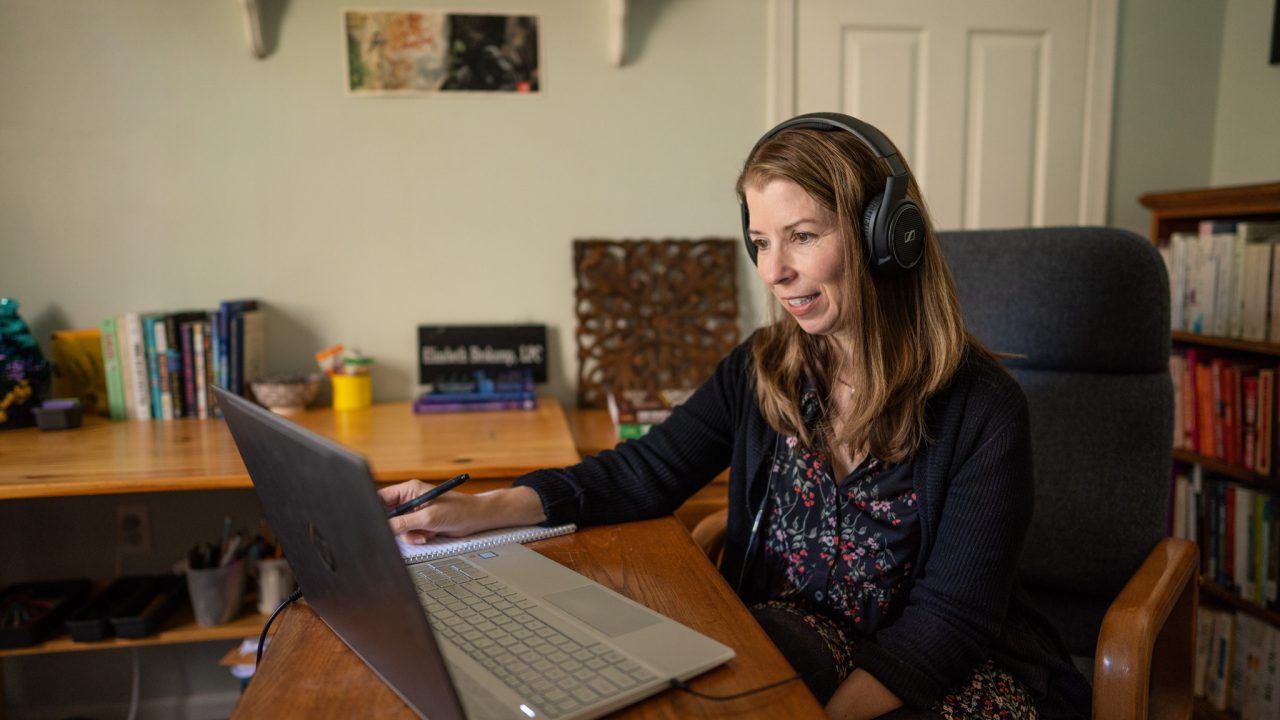
WASHINGTON—On Wednesday, the United States District Court for the District of Columbia struck down a D.C. law that barred therapists from other jurisdictions from doing online teletherapy visits with clients in D.C. The decision comes nearly six years after Virginia-based counselor Elizabeth Brokamp teamed up with the Institute for Justice (IJ) to file a lawsuit arguing the law violated the First Amendment.
“This decision is a victory for anyone who speaks for a living,” said IJ Deputy Director of Litigation Robert McNamara. “Elizabeth’s victory here confirms that the First Amendment protects useful speech, including counseling, and that licensing boards can’t censor speech simply because someone doesn’t have their permission to talk.”
D.C.’s law held that only therapists licensed in the district were allowed to serve clients in the district, even if they were only involved in talk therapy. This meant that providers like Elizabeth, who is licensed in Virginia and has operated there for more than 20 years, had to turn away D.C. based clients seeking online teletherapy. When the demand for online teletherapy boomed during the COVID pandemic, and all of Elizabeth’s services were moved online, she was told by district regulators that she could not accept any new clients from D.C.
“Many clients prefer to do teletherapy from the comfort of their own homes, so it’s been very difficult having to tell clients I cannot help them out because of these regulations,” said Elizabeth. “This victory will make it easier for D.C. residents to get the mental health care they need in a way that fits their wants and needs.”
In Wednesday’s decision, the court held that because the licensing law prohibits Elizabeth from holding talk therapy sessions, it necessarily restricts her speech: “Brokamp’s counseling practice consists essentially of speaking to her clients,” wrote United States District Court Judge Timothy J. Kelly, “nothing more. The court therefore held that the: “licensure requirement violates the First Amendment as applied to Brokamp,” and blocked the district from enforcing it against Elizabeth moving forward.
“People don’t lose their free-speech rights just because the government adopted a licensing law,” said IJ Senior Attorney Rob Johnson. “Regulators sometimes have trouble remembering that, but IJ is always happy to remind them.”
This case is part of IJ’s broader First Amendment work aimed at protecting the free speech rights of those who speak for a living. Earlier this month, IJ won a lawsuit on behalf of a death doula in Fort Wayne, Indiana, challenging a law that required her to get costly, irrelevant funeral home and funeral director licenses just to discuss end-of-life options with families. IJ is also representing a North Carolina non-profit in its fight against a state law that prevents qualified non-lawyers from providing even the most basic legal advice. And back in 2014, IJ won a case on behalf of two D.C. tour guides striking down a district law that required them to get a license before they could speak to tour groups in the city.
More on First Amendment

First Amendment
National Law Firm Warns Maine Town: Fines for Autistic Girl’s Lawn Ornaments Violate the First Amendment
First Amendment
Public Interest Law Firm Warns PA Lawmakers Against Regulating Speech
First Amendment