Court Prohibits California Regulators from Enforcing Private Investigator Licensing Law Against Anti-Spam Crusader
After California agreed that enforcing its licensing requirement was unconstitutionally irrational, the court ruled that small business owner Jay Fink is free to help Californians stand up to spam
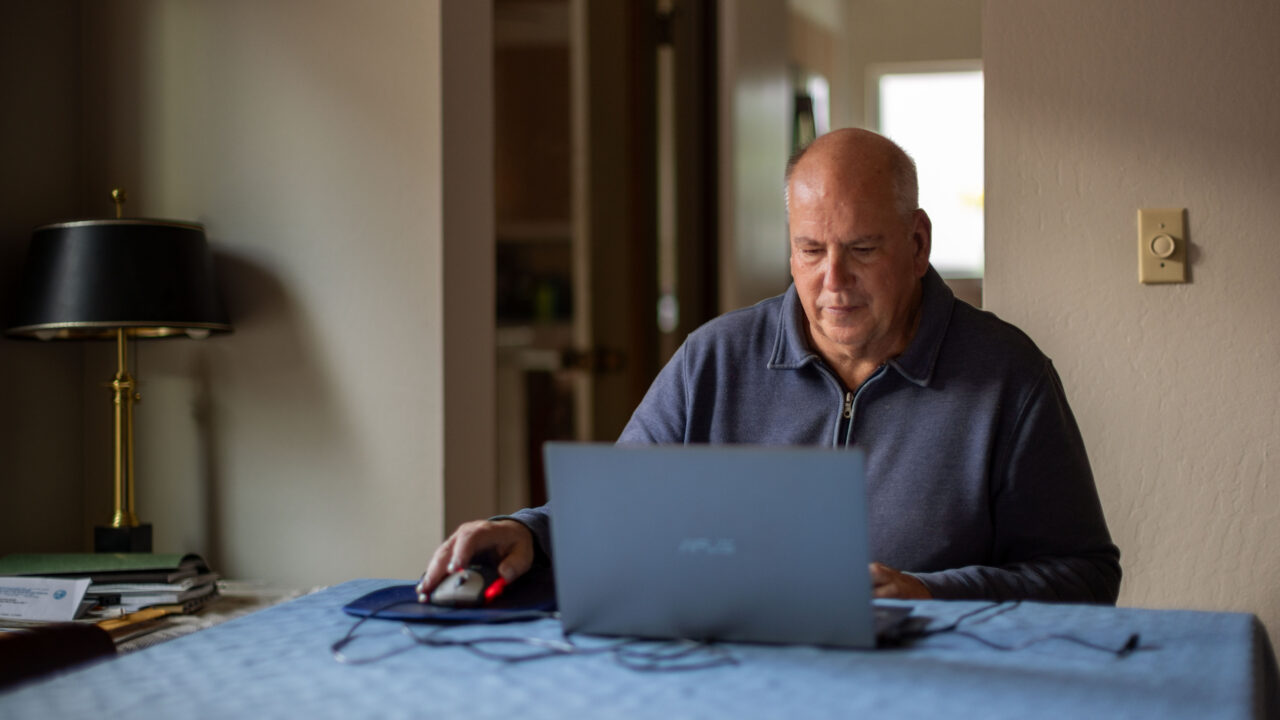
U.S. District Judge Rita Lin has permanently enjoined the California Bureau of Security and Investigative Services from enforcing its private-investigator licensing requirement against anti-spam entrepreneur Jay Fink. The order declares that forcing Jay to get a license to run his business is so irrational that it violates the Due Process Clause of the Fourteenth Amendment.
“I’m thankful that I won’t have to worry about losing my livelihood anymore,” said Jay, who is represented by the Institute for Justice. “But the state never should have shut me down in the first place.”
Jay’s business stems from California’s anti-spam act, which allows individuals to sue spammers. But to sue, they have to first compile evidence. To do that, recipients often have to wade through thousands of emails. For more than a decade, Jay has offered a solution: he and his team will scour a client’s junk folder and catalog the messages that likely violate the law.
But last summer, Jay’s job—and Californians’ ability to bring spammers to justice—came to a screeching halt when the state told him he was a criminal. A regulator told Jay he needed a license to read through emails that might be used as evidence in a lawsuit. And because Jay didn’t have a private investigator license, the state shut him down.
Jay had never heard of a private investigator license, and he quickly learned that getting one was no small task. Aside from paying fees and passing a test, he would have had to spend 6,000 hours training in fields completely unrelated to identifying spam, like arson investigation or investigative journalism.
Requiring Jay to get a license has always been unconstitutional. But now, both the court and the state agree. Last March, Judge Lin ruled that Jay was likely to win his case to reopen without a license. Shortly after that order was issued, the state came to its senses. It agreed to jointly petition the court for an order that forever prohibits it from enforcing its licensure law against Jay. That means he’s immediately free to get back to work.
“There’s never a reason to force entrepreneurs to undergo 6,000 hours of irrelevant training,” said Institute for Justice Attorney Andrew Ward. “We’re very happy the state finally recognized that.”
More on First Amendment
First Amendment
Virginia Counselor Wins Lawsuit Challenging District of Columbia’s Restrictions on Teletherapy Sessions

First Amendment
Fort Wayne Death Doula Secures Final Victory in First Amendment Lawsuit Challenging State’s Restrictions on Discussing End-of-Life Care
First Amendment
