From the Courtroom to Capitol Hill: Challenging Mass Surveillance
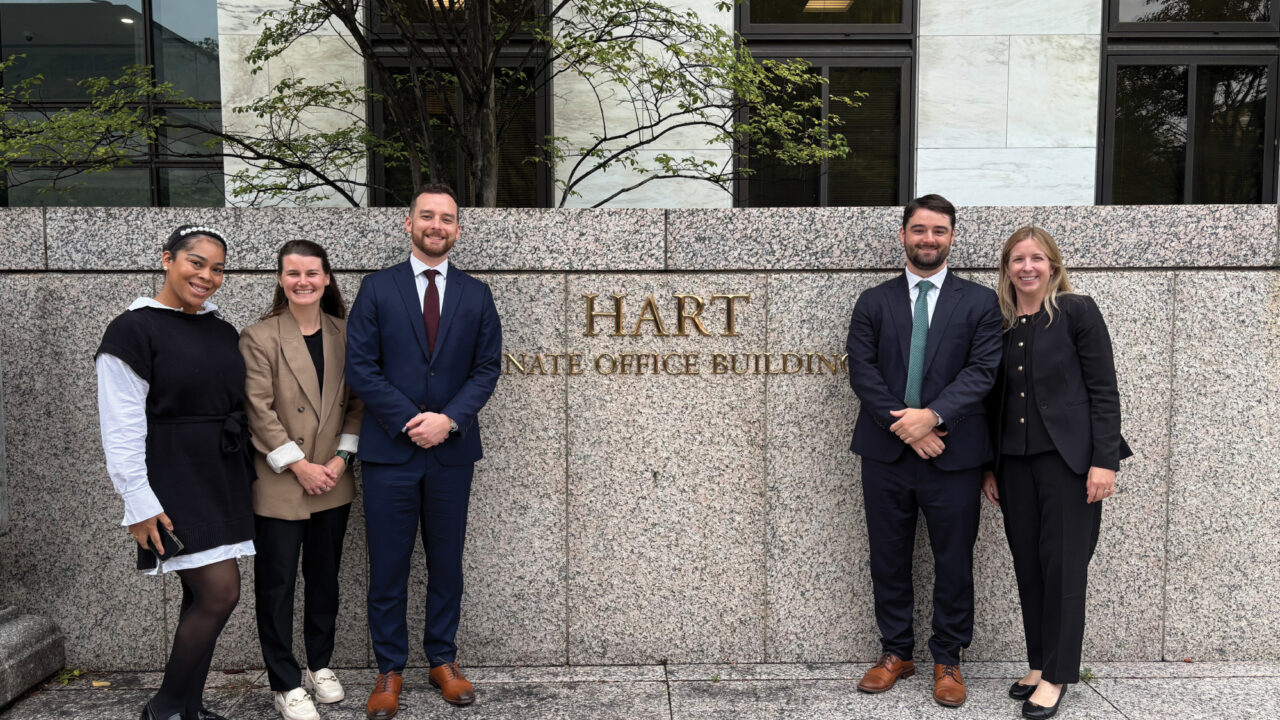
On September 23, the CEOs of Flock Safety, Axon, Motorola Solutions, and Verkada were invited to explain to the U.S. Senate how their automated license plate reader (ALPR) cameras have photographed hundreds of millions of cars across the country—and what they do with those photos.
None of them showed up.
The companies responsible for the technology that watches most cars in America declined to be seen at a hearing entitled “Always Watching: Flock’s Nationwide AI Surveillance Network.”
But IJ was also invited—and we were more than happy to accept that invitation.
The hearing was arranged by the Senate Judiciary Subcommittee on Crime and Counterterrorism to examine privacy and the risks posed by AI-enabled surveillance. The Subcommittee was concerned that this technology could allow authorities to reconstruct people’s movements over extended periods. IJ shares those concerns.
I had the opportunity to tell several senators what our litigation has taught us about ALPRs.
Flock, the largest ALPR company, operates more than 120,000 cameras across 49 states. Those cameras capture 20 billion photos a month. They record make, model, color, and dents. They can map everywhere a car has been captured.
Run that map back a few weeks and a government agent can do more than just recreate someone’s day; they can gain insight into someone’s habits, personal associations, religious beliefs, and more. In short, ALPR technology can reveal your way of life.
I could explain this to the Subcommittee with authority because I was armed with an arsenal of information that IJ has gathered through multiple lawsuits. No one has looked more closely at how governments use ALPR networks than my colleagues, who were among the first to examine how the surveillance dragnet operates in a particular city.

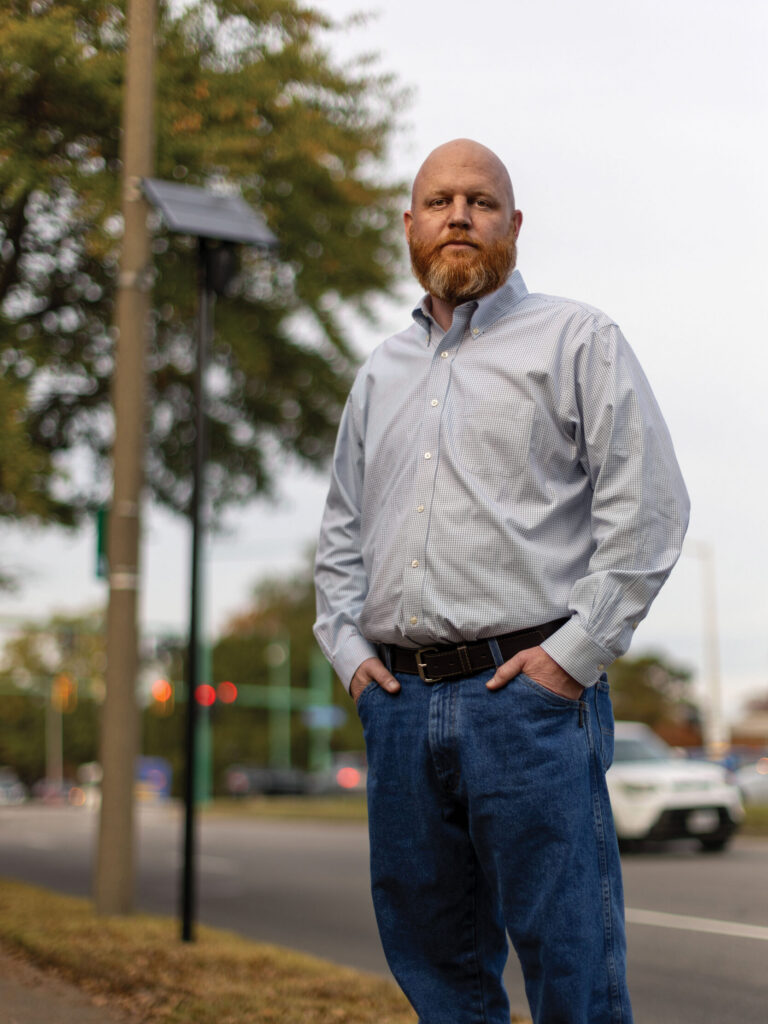
Lee Schmidt and Tony Tan joined with IJ to file lawsuits against ALPR cameras in Norfolk, Virginia, and San Jose, California.
In 2024, IJ filed the first federal civil challenge to one of those networks. We represent Navy veteran Lee Schmidt and home healthcare worker Crystal Arrington in Norfolk, Virginia.
Discovery in that case revealed more than 170 cameras capturing 41 million images in one month. My colleagues combed through records of 230,000 searches—around 75,000 (32.6%) of which were justified with entries like “cj” and “inv”—and audit logs no one had read until we sued.
An IJ class action followed in April 2026 in San Jose, California.
In parallel to litigation, we built a public database of ALPR abuses, which now documents more than 300 incidents. Our model legislation has shaped dozens of reform bills and ordinances. And our advocacy has helped concerned citizens and policymakers rethink their policies around ALPRs—or end their contracts altogether.
That record is why Congress called us.
It is also why IJ insists that, at a bare minimum, government agents need to get a warrant before searching for motorists’ movements, patterns, and associations.
The warrant requirement is reasonable, and government agents are familiar with the process of obtaining one. Police officers across the country routinely get warrants for cellphone location records and other surveillance data, and the U.S. Supreme Court held in June that even two hours of location data is protected by the warrant requirement.
Congress can make that standard the rule of the road before these cameras end up, as Flock’s founder has promised, on every street corner.

Also in this Issue

Liberty & Law
VICTORY! Jury Holds Texas County Liable For Baseless Highway Stops
Liberty & Law
The Fourth Amendment Is Back On The Jobsite In Alabama

Liberty & Law
VICTORY: Humboldt County Reforms Predatory Code Enforcement Scheme

Liberty & Law
Sixth Circuit To East Cleveland: You Can’t Tow Away Dissent

Liberty & Law
Opening The Road For Mobile Beauty Entrepreneurs In South Carolina

Liberty & Law
Ten Years, Two Lawsuits, One Unbroken Principle

Liberty & Law
New IJ Research Shows Public Benefits Becoming Private Burdens
Liberty & Law
Keep Swingin’: The Long Game For Liberty
Liberty & Law
IJ Makes Headlines
Subscribe to get Liberty & Law magazine direct to your mailbox!
Sign up to receive IJ's bimonthly magazine, Liberty & Law, along with breaking news updates about the Institute for Justice's fight to protect the rights of all Americans.