Private Property
Connecticut Home Hiking
Connecticut family takes legal action after town threatens to ban them from having hikers on property.
- Case Name
- Copley v. Roxbury
- Status
- Active Cases
- Location
- Roxbury, Connecticut
- Date Filed
- August 27, 2026
The Case
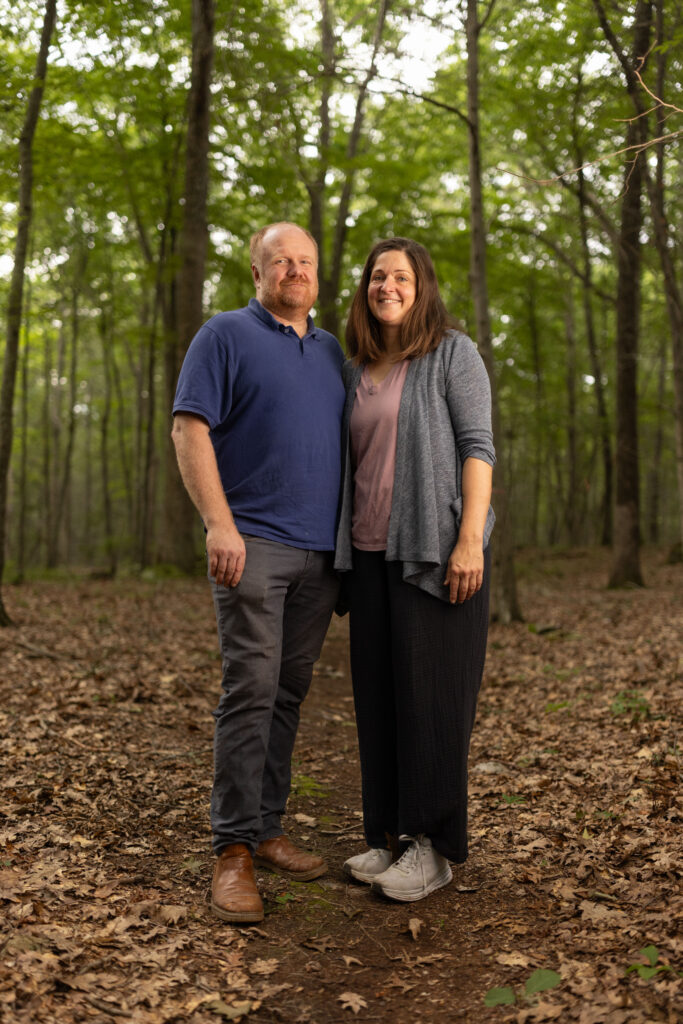
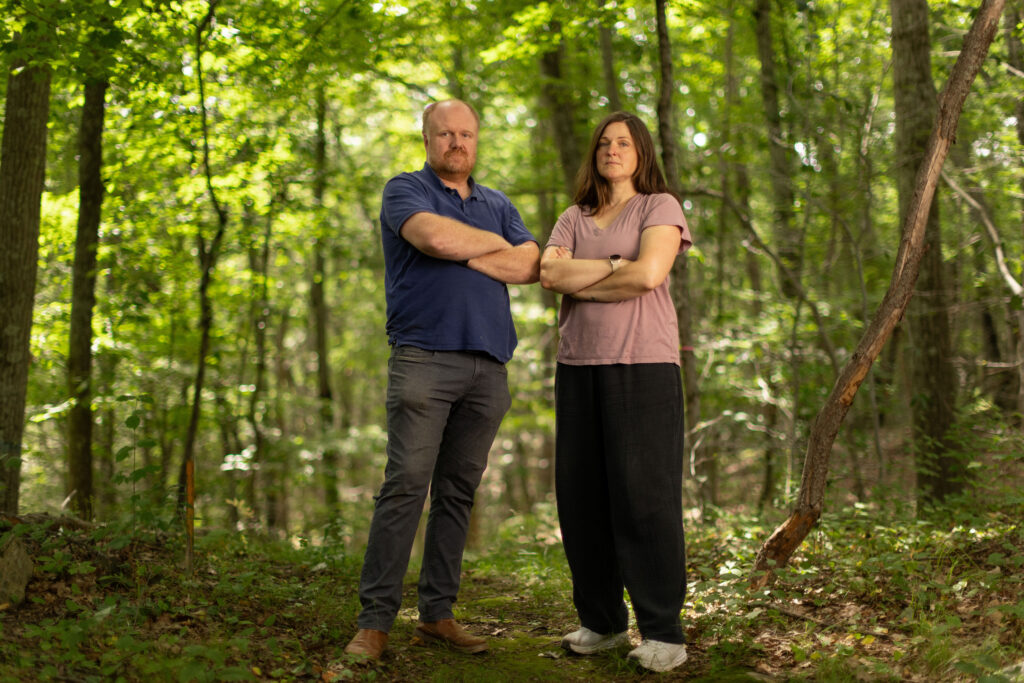
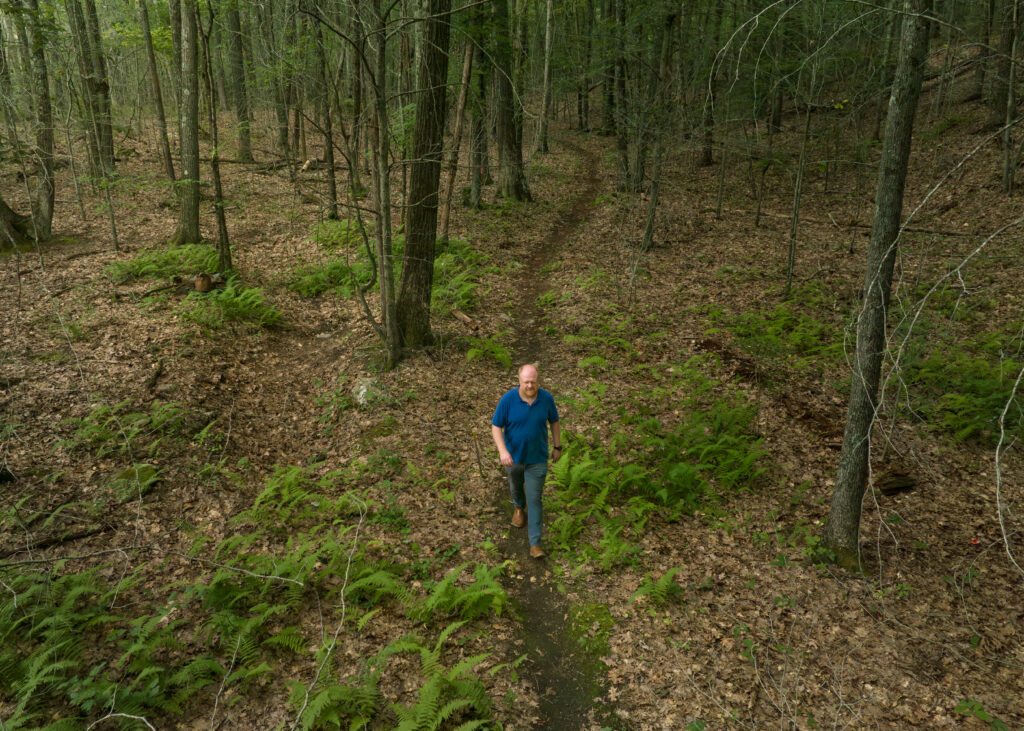
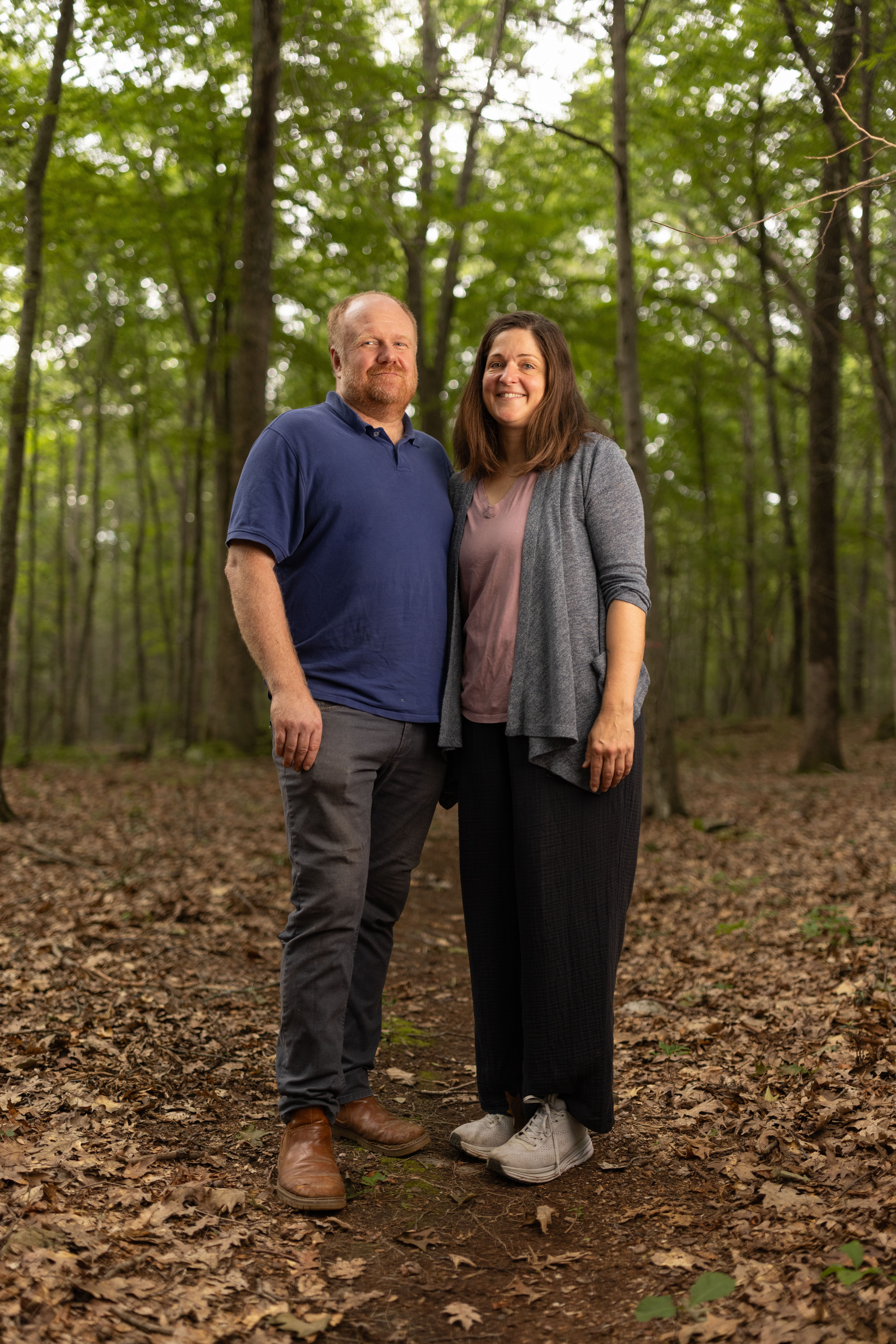
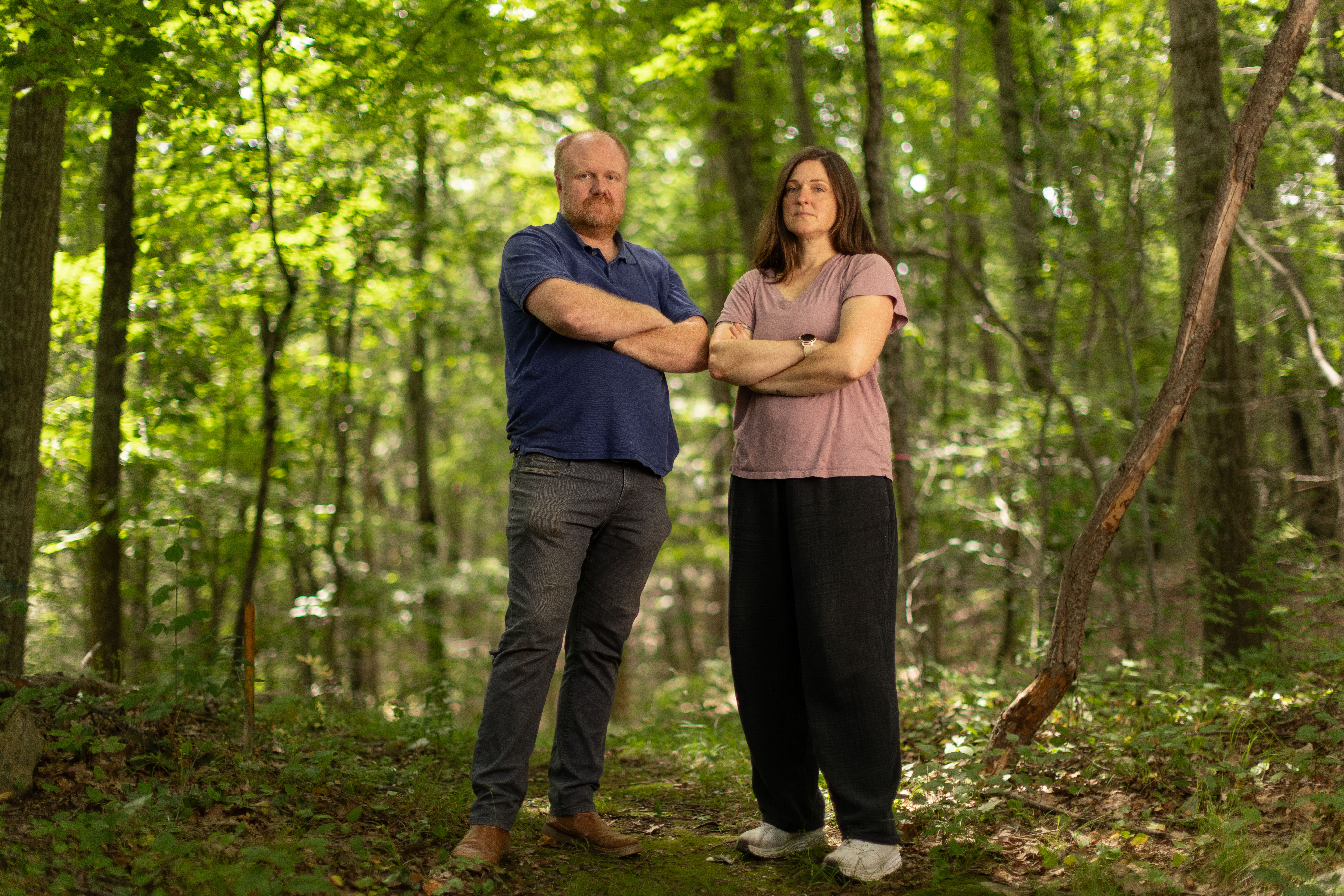
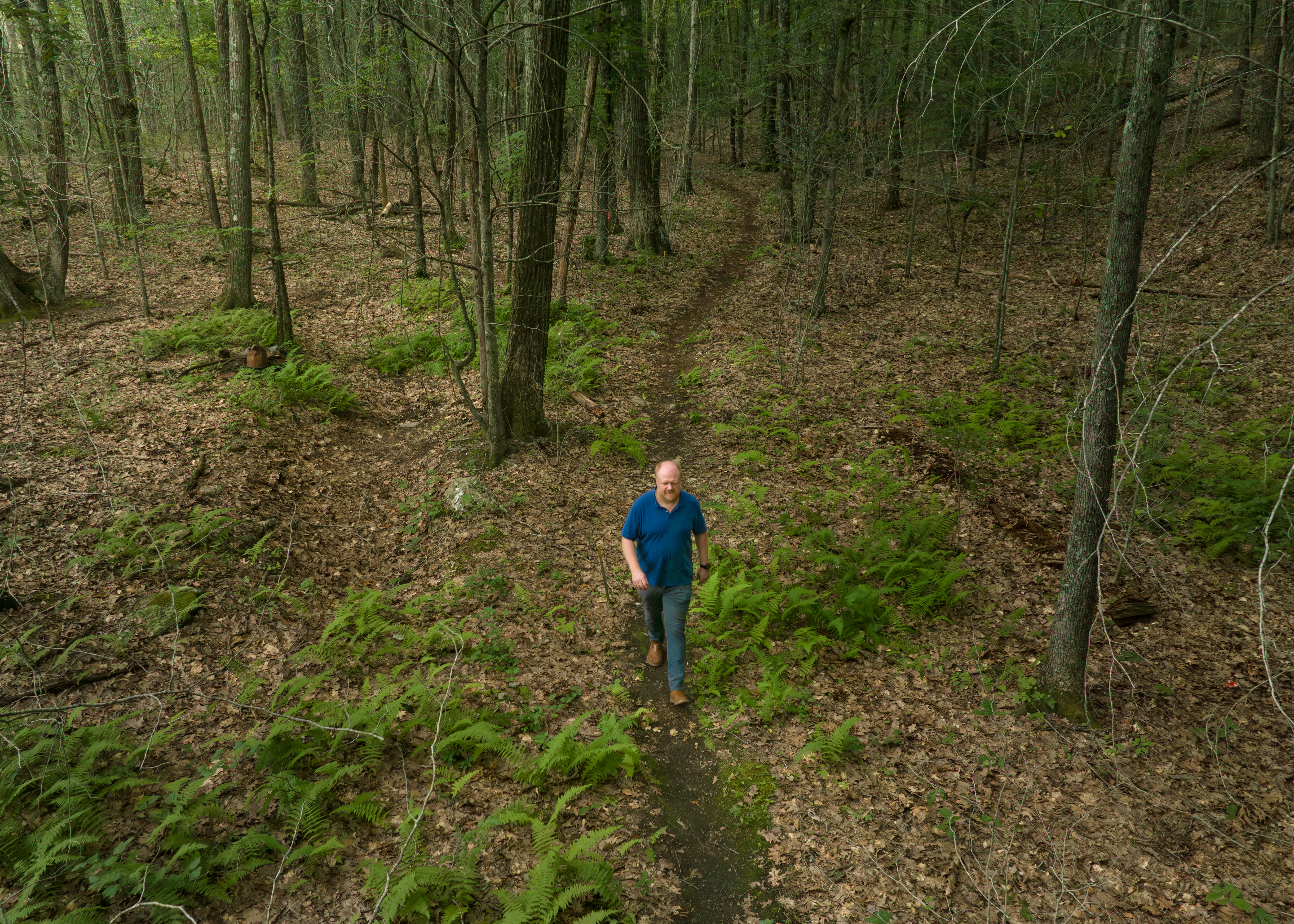
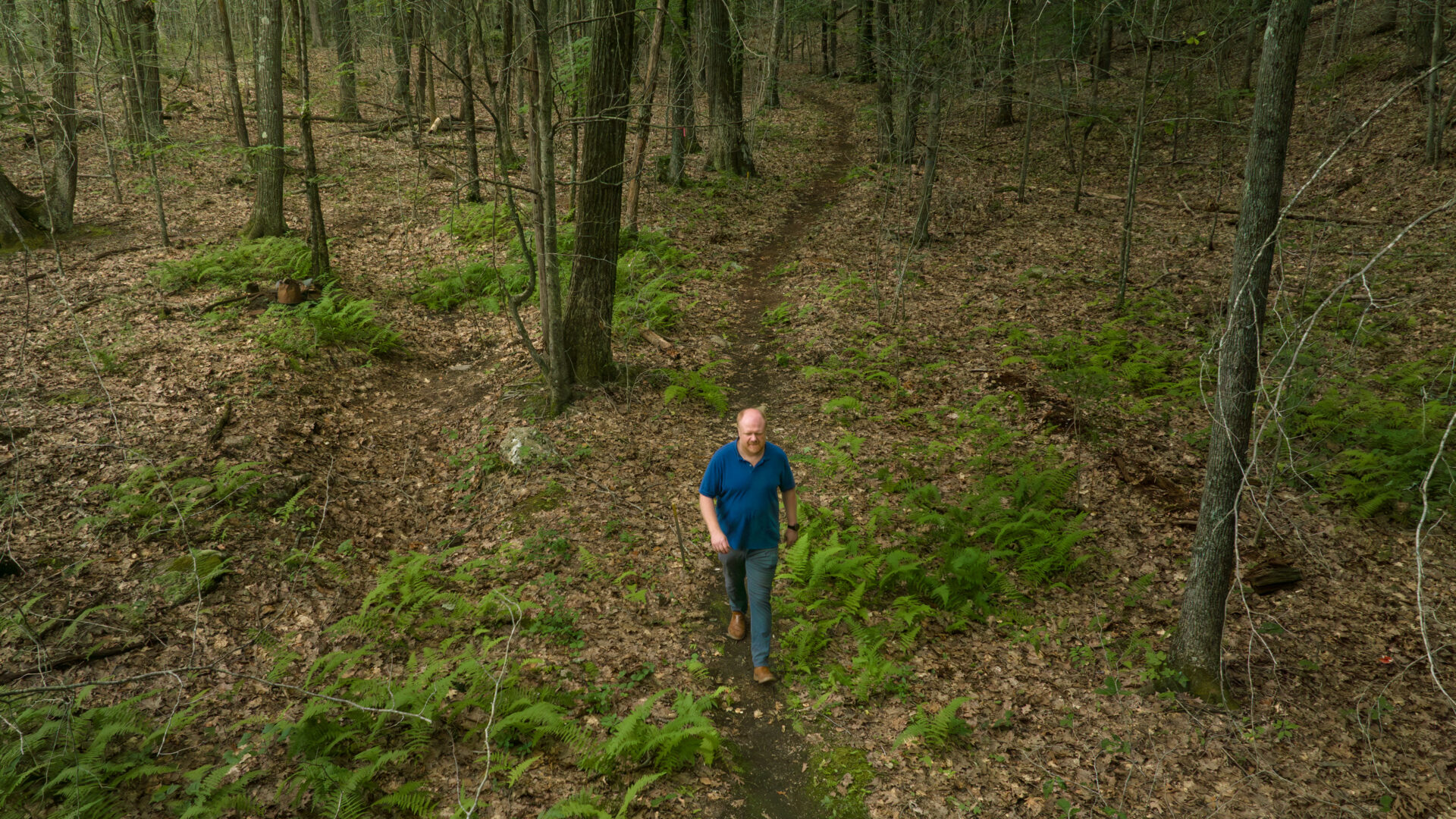
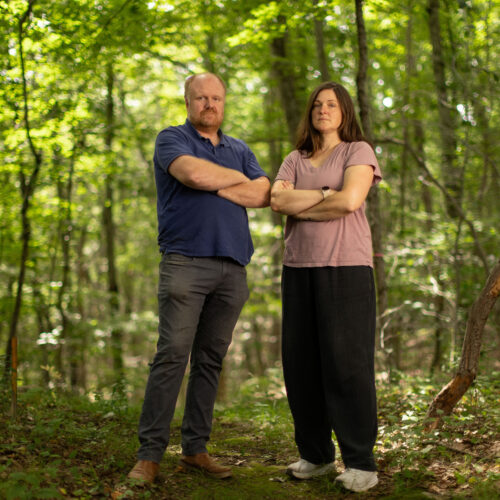
Charles and Eli Copley believed they found their dream home when they purchased a beautiful fixer-upper cottage on a 50-acre plot of land in the town of Roxbury, Connecticut, in 2022. Intent on turning the house into a home, the Copleys began fixing up not only the cottage itself, but the land surrounding it—building hiking trails, removing invasive species, and working with the Natural Resources Conservation Service to develop a forest management plan. As part of their efforts, the Copleys welcomed local hikers and dog owners—one or two at a time—to privately hike their trails for a small fee. The project aimed to keep aggressive low growth vegetation at bay and to raise funds to support the Copleys’ broader forest management efforts. But after receiving a cryptic “Possible Notice of Violation” from the town citing its home-based business code, the Copleys have since spent more than a year unsuccessfully trying to work with town officials to once again welcome people onto their property. Now, Charles and Eli have teamed up with IJ to demand that local officials allow them to begin inviting hikers onto their property again.
The Copleys don’t feel that allowing people to walk in their forest constitutes a “business,” nor did they ever think that anything they were doing to maintain the forest could be deemed “illegal.” Indeed, identical land uses are permitted on nearby properties managed by the local land trust, and significantly more intensive agricultural uses are permitted throughout the town. Further, the Copleys’ trails are not visible from neighboring properties, and the neighbors that the Copleys have spoken to about their hiking trails have signaled their support. And even when hikers do bring their dogs onto the property, those dogs must remain leashed and be up-to-date on all of their shots. Allowing individuals to privately walk around the Copley’s hiking trails is utterly harmless.
Fortunately, Connecticut law protects the rights of homeowners like the Copleys. And the Connecticut Constitution further protects all residents of the state from unequal or irrational government restrictions on property use as well. IJ and the Copleys are demanding a reasonable interpretation of the zoning code that respects both the rural character of the community and essential private property rights.

Case Team
Client
Charles and Eli Copley
Client
Attorneys

Ari Bargil
Senior Attorney

John Korevec
Attorney
Staff

Dan King
Assistant Director of Media Relations

Kyndra Griffin
Senior Paralegal
Media Resources
Get in touch with the media contact for image resources, press releases, and interview requests.
Media Images






Case Documents
Case Summary
Charles and Eli Find Their Perfect Outdoor Escape
After meeting in the United Kingdom, getting married, and spending several years in Charles’ native South Africa, the Copleys moved to New England with the hope of raising children closer to Eli’s parents. First settling in a more urban area of coastal Connecticut, the Copleys eventually sought to expand their home to accommodate their growing family. In 2022, the Copleys discovered a 50-acre property in Roxbury that they believed perfectly fit the bill.
The Roxbury property appealed to the Copleys for several reasons. First and foremost, it sat on beautiful forestland in rural Connecticut—land they hoped to use regularly and responsibly. In addition, it sat within a strong neighborhood—close enough to the town center to engage with their neighbors, but far enough away to enjoy the peace and quiet they craved. The land also included a quaint cottage. With a little work, the Copleys thought, the house would be an ideal place to raise and educate their children. Together, the land and the cottage reflected the Copleys’ vision of their unique American Dream. They wanted a place to raise a family while honoring the natural world around them.
And in Roxbury, they thought they had found it. After purchasing the property, the Copleys got to work renovating the cottage and caring for the sprawling forestland. The Copleys wanted to manage the property the right way, so they worked with the Natural Resources Conservation Service to develop a forest management plan. All the while, the town of Roxbury signaled its support. As part of this plan, the Copleys set out to tackle the many invasive species that had been proliferating on the property. To help with that mission, the Copleys built a network of trails. The regular foot traffic, they realized, could help wrangle some of the low-growing invasives. This sort of active conservation, the Copleys rightly believed, was contemplated by their forest management plan and, as an agricultural use, permitted under Roxbury’s zoning code.
But as the Copleys slowly realized, singlehandedly managing the trails on their 50-acre forest was no easy task. So, the Copleys decided to crowdsource their efforts. They posted a profile on the website SniffSpot (effectively an Airbnb for dog-walking) to permit local hikers and dogwalkers to “rent” the Copleys’ forest for an hour or two at a time—allowing people who would prefer a private walk over crowded local parks an opportunity to get outside. In return, the Copleys would enjoy the benefit of increased foot traffic on their trails—assisting their efforts to keep aggressive low growth vegetation at bay.
The Copleys were excited to share their forest with friends and other invitees—allowing others to experience nature, understanding that private trails are preferrable for many, including solo hikers and parents with neurodivergent children. They do not understand how allowing people to hike on trails or walk their dogs on an open, rural property could possibly be problematic, particularly given similar uses on other land throughout the area.
With the SniffSpot profile up-and-running, alongside their ongoing renovation and forest management efforts, the Copleys’ American Dream was slowly becoming a reality.
Town Officials Confront the Copleys, but Fail to Provide Meaningful Guidance
All was well for the Copleys until April 2025, when they received a confusing “Possible Notice of Violation” letter from the town. The “Possible Notice” flagged that the town had become aware of the Copleys’ SniffSpot profile. The notice copied and pasted text of the town’s home-based business ordinance and then asked the Copleys to determine whether the ordinance applied to their use—and if so, to shut down their SniffSpot page until obtaining necessary approvals.
Although they didn’t believe allowing hikers onto their property—even for a small fee—constituted a “home-based business,” out of an abundance of caution, the Copleys immediately stopped taking SniffSpot reservations. They then reached out to town leaders to devise a path forward for them to open their property back up. They spoke with local zoning leaders, attended public hearings to plead their case, and even suggested possible zoning amendments in an effort to find some path forward.
Over a year later, however, the Copleys have concluded that they were led down a black hole. While the “Possible Notice of Violation” flagged the Copleys’ SniffSpot profile as a possible home-based business, when they asked the town whether they could simply apply for a home-based business license, the town ultimately concluded that they could not. Because the Copleys’ activities were not all confined to inside their dwelling, the town explained, they were ineligible for a home-based business permit.
That the Copleys were ineligible for a home-based business permit isn’t shocking. After all, they weren’t really running a typical business. So, the Copleys pointed to a part of the zoning code that more accurately captured their desired use—the town’s provisions identifying agricultural and forestry use as permissible as of right. And as part of that use, low impact recreation was an acceptable accessory use. The town has never rejected this interpretation, and yet, still insists that the Copleys intended use is prohibited. It just refuses to say how or why.
Unfortunately, the Copleys’ struggle is not unique. Homeowners all over the country regularly find themselves at loggerheads with local zoning officials, who tend to believe that any land use is problematic, unless that land use is first blessed by local zoning officials. But here, the forest management plan for the property—developed with the Natural Resources Conservation Service—included low impact recreation as an expected use. Further, the town’s zoning code appeared to permit similar forest management and recreational activities as well. Indeed, identical uses are allowed on land managed by the local land trust, and more fundamentally, people have been hiking and walking dogs on rural land long before the town of Roxbury even existed.
Like many other towns, Roxbury appears to believe that its zoning rules should be read with a presumption of impermissibility—if the town has not already thought of and approved of a particular land use in direct and explicit terms, then it must be presumed to be unlawful. But this reading cannot be correct. Such an interpretation of the zoning power would effectively prevent every property owner from doing anything innovative or new on their property at all—no matter how harmless or sensible the activity is, and regardless of whether the activity otherwise complies with local zoning rules. Zoning cannot be written to make the future illegal.
The Connecticut Supreme Court and Constitution Protect Homeowners Like the Copleys
Fortunately for the Copleys, the Connecticut Supreme Court has long acknowledged that Connecticut law does not permit land use restrictions unless they serve a legal and useful purpose. And where local zoning rules can fairly be read in favor of a property owner, the Connecticut Supreme Court has ruled that they should be. Because Roxbury’s zoning rules permit agricultural and forestry management as a matter of right, and because low impact recreation is an acceptable accessory use under any fair read of local regulations, the Copleys’ have a right to reinvite hikers and dogwalkers onto their property.
And if Roxbury’s zoning ordinances do somehow prohibit the Copleys from inviting others onto their property, those provisions violate the Connecticut Constitution. First, the Connecticut Constitution guarantees equal protection under the law. Allowing identical uses on neighboring land trust managed properties, while disallowing those activities on the Copleys’ land violates equal protection principles, as does allowing significantly more intensive uses on nearby plots, while prohibiting low impact activities by the Copleys and their guests. Second, the Connecticut Constitution’s embrace of substantive due process protections prohibits government regulations that are not rationally based on a legitimate government interest. And here, the town of Roxbury has no rational basis for restricting the Copleys from inviting individuals to hike on their property.
The town of Roxbury can write reasonable restrictions into its zoning code to protect the health and welfare of the community. It cannot, however, restrict harmless and common property uses that are consistent with those regularly conducted in the surrounding area. Zoning can be an effective tool to prevent nuisances from proliferating in a community. But it does not provide unlimited power to local officials to impose their whims on property owners, no matter how irrational or overreaching they may be.
The Litigation Team
Charles and Eli are represented by IJ Senior Attorney Ari Bargil and IJ Attorney John Korevec. The team is assisted by Evan Seeman, Brian Smith, and Ryan Hoyler of Robinson & Cole LLP as local counsel.
The Institute for Justice
The Institute for Justice (“IJ”) is a nonprofit, public-interest law firm that protects property rights across the country. As part of that mission, IJ’s Zoning Justice Project fights against arbitrary and abusive zoning restrictions that impair the right to use private property in productive and safe ways. In Pennsylvania, IJ is litigating on behalf of a home-based mechanic after a local official attempted to shut down his business in retaliation for a personal dispute. In South Carolina, IJ is defending a swim teacher who found her approval to give backyard swim lessons unjustifiably revoked after a single complaint from her new neighbor—lodged before the neighbor had even moved into the adjoining property. And in Montana, IJ successfully defended the right of a local charity to operate a warming shelter to protect the city’s most vulnerable unhoused residents.