From One Braiding Salon To Nationwide Reform

IJ’s very first case was an economic liberty challenge on behalf of hair braiders. Thirty-five years later, IJ’s braiding work demonstrates how far we have come—and how much our combination of litigation, legislation, activism, media outreach, and research can accomplish as we continue to clear the way for small entrepreneurs.
In 1991, IJ officially launched by representing Taalib-Din Uqdah and Pamela Ferrell, the husband and wife owners of Cornrows & Co., a successful African hair braiding salon. D.C.’s board of cosmetology wanted to impose burdensome licensing requirements on braiders: 1,500 hours of training at a cost of thousands of dollars. Not a single hour of that training had anything to do with the centuries-old art of African hair styling.
At that time, every jurisdiction in the U.S. (50 states and D.C.) had a similar requirement. But the launch of that first case changed things.
Breaking Braiding Barriers
IJ’s public pressure forced D.C. to back down and forced others to take note. D.C. replaced the 1,500-hour requirement with a 100-hour one focused on braiding. New York also adopted a “specialty” license for braiding that same year. By 2000, Michigan, Maryland, and Ohio (in response to IJ litigation) had followed suit. And in California, IJ won a landmark judicial decision protecting the right to braid.
That California victory was momentous. It demonstrated that economic liberty cases could be won in court. It set a template—an “easy” example for other judges in other cases to follow. And it therefore increased the public pressure that IJ brought to any given case.
The next couple of years saw braiding cases filed in multiple states: Arizona, Minnesota, Mississippi, and Washington. All of these states, and several others, changed their laws.
By 2006, IJ could report, with well-earned bragging rights, a big change in the law. Only 29 jurisdictions still required burdensome and irrelevant cosmetology licensing for braiding. Eleven states had adopted a less burdensome specialty license. And better still, 11 others required no license at all.
But more could be done.
Expanding The Effort For Transformative Impact
In 2013, our work expanded to challenge Texas’ rules governing braiding schools—rules that prevented experienced braiders from teaching their craft to others. Our victory there spurred the state to eliminate all braiding licensing.
And this prompted us to start our Braiding Freedom Initiative. Clearly, braiding had always been a part of IJ, but the initiative brought to bear all the tools of public interest law that are now the hallmark of IJ’s work. Multiple research reports supported multiple case launches, which attracted national media attention, which created public pressure on lawmakers both in the states we sued and elsewhere, which was amplified by activists on the ground.
Today, IJ’s effect on the world of braiding is manifest. Our efforts—directly and indirectly—have led to a massive reform of braiding licensing laws across the country.
In all, we have sued over braiding regulations in 14 states, leading to multiple court victories and many more legislative reforms. We have worked for braiding freedom with activists and lawmakers in at least 20 more states. And through media and strategic research, we have elevated the visibility of the issue—and of occupational licensing in general—such that many states have reformed their laws without IJ needing to step in.
Entering 2026, IJ’s 35th anniversary year, there was only one state—Hawaii—whose law still required a full-blown cosmetology license just to braid hair. And thanks to our continued efforts, Hawaii has finally changed its law.
There were once 51 full-license jurisdictions; now there are none. Instead, 38 states have full braiding freedom: no license at all. Only 13 jurisdictions require a specialty license, and just five of these require more than 50 hours of training. And along the way, we have introduced the idea of economic liberty and its importance through outlets as varied as National Public Radio, Essence, and Us Weekly. We helped make a movie about braiding freedom and IJ client Melony Armstrong. IJ has changed the world, and we are continuing to do so.
Braiding As A Model For Economic Liberty
IJ’s braiding work has set the standard for how we fight for economic liberty. We find outrageous laws that protect entrenched interests at the expense of entrepreneurs and consumers. We show judges, lawmakers, and the public the horrible effects those laws have on the lives of real people. And we convince judges, lawmakers, and, ultimately, the public, that if they want to do justice, they can.
IJ has represented drivers, winemakers, casket sellers, bakers, vendors, and many more. Where we once focused on arguments under the 14th Amendment, we have expanded to include parallel state constitutional protections, antimonopoly provisions, and separation of powers doctrines. We are getting state high courts—in Georgia, North Carolina, Pennsylvania, Texas, and beyond—to reembrace meaningful protections for economic liberty. Our economic liberty litigation now routinely overlaps with our other pillars, such as property rights through our home-based business clients and free speech on behalf of engineers and veterinarians.
Our economic liberty research is renowned in both academic and policy circles. License to Work (now in its third edition) remains the touchstone in the field of licensing research. We have multiple peer-reviewed published studies under our belts, and academics frequently cite our work. We have been relied upon by reformers across the political spectrum and from city councils to the White House. We have 16 economic liberty-related model bills that have been adopted across the country. Our activism team works in cities everywhere to make it cheaper, faster, and simpler to start a small business. And our law school clinic trains the next generation of lawyers who can help entrepreneurs navigate the hurdles that remain.
It all started 35 years ago with braiders and the simple yet powerful insight that economic liberty—the right to earn a living in the occupation of your choice without unnecessary government interference—is at the heart of the American Dream.
Also in this Issue

Liberty & Law
VICTORY! Pennsylvania Supreme Court Unanimously Protects Landowners From Warrantless Spying
Liberty & Law
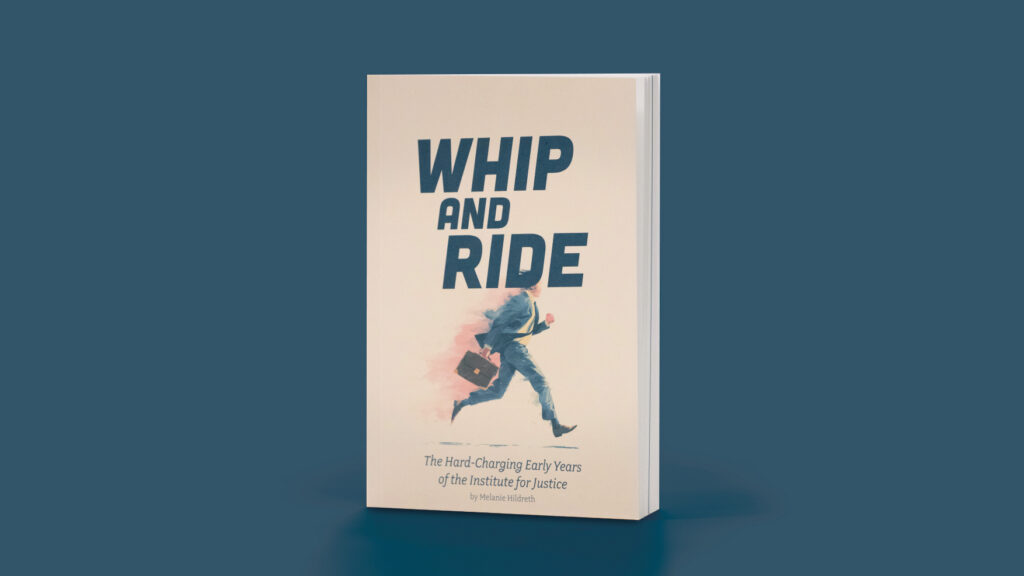
You Know IJ. Learn How It Began.

Liberty & Law
A Government of Laws, Not of Men: IJ’s Rule of Law Pillar

Liberty & Law
Raise A Glass To Entrepreneurship

Liberty & Law
Ninth Circuit Knock-Down Of Outrageous Federal Financial Surveillance

Liberty & Law
No License Required: The Long Fight For The Right To Speak

Liberty & Law
Cert Granted! IJ Brings Excessive Fines And Forfeitures Back To The Supreme Court
Liberty & Law
James King’s Case Is Over. The Work It Started Isn’t. Six Years Of IJ’s Project On Immunity And Accountability

Liberty & Law
IJ Challenges Warrantless CBP Raid
Liberty & Law
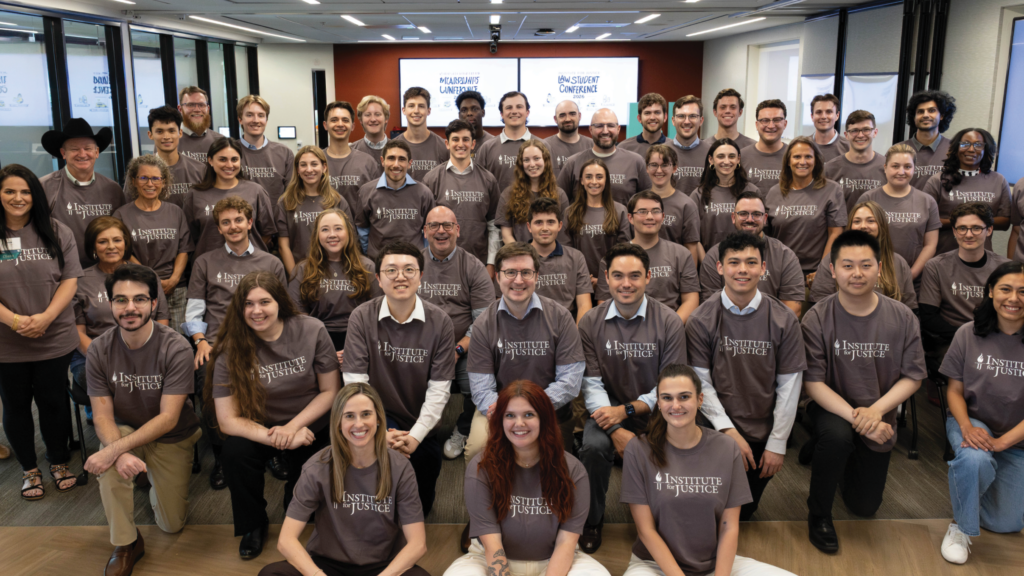
Then And Now: Training The Next Generation Of Litigators For Liberty

Liberty & Law
A Pain In The Zoning Code: Leavenworth Prohibits Home-Based Physical Therapy

Liberty & Law
Back To School & Back To Work: IJ Launches Education Entrepreneurship Project

Liberty & Law
IJ Makes Headlines
Subscribe to get Liberty & Law magazine direct to your mailbox!
Sign up to receive IJ's bimonthly magazine, Liberty & Law, along with breaking news updates about the Institute for Justice's fight to protect the rights of all Americans.