Cert Granted! IJ Brings Excessive Fines And Forfeitures Back To The Supreme Court

IJ is headed to the U.S. Supreme Court for a third time this term! In July, the Court granted our cert petition on behalf of pilot Ken Jouppi. That means the Alaska high court will not be the last frontier for the state’s efforts to forfeit Ken’s $95,000 airplane—over a six-pack of Budweiser.
Ken long made a living using his Cessna as a one-man air-taxi service, shuttling people and cargo over the Alaskan wilderness. On April 3, 2012, Ken was scheduled to fly a passenger and her groceries from Fairbanks to the village of Beaver. The day began like any other for Ken. But hidden in the passenger’s luggage were three cases of beer intended as a gift to her husband for his private consumption.
But Beaver is a “dry village.” It is illegal to possess or bring beer into the village. State law makes most violations a misdemeanor, with a minimum sentence of three days’ incarceration and a $1,500 fine.
And, as Ken would find out, state law also potentially subjects violators to forfeiture.
Ken knew of Alaska’s dry village system, and he wouldn’t deliberately fly alcohol illegally. But he also respected his clients’ privacy and wouldn’t go hunting through their luggage. No law required him to search their belongings, and he felt it would be demeaning to do so.
The Excessive Fines Clause was built for cases like this, ensuring that financial punishments bear some relationship to the gravity of the offense.
Just before Ken took off that morning, troopers arrived, searched his plane, and found the beer. Both Ken and the passenger were charged with misdemeanors. Ken insisted he knew nothing about the beer; the troopers contended one six-pack of Budweiser would have been visible to him in a shopping bag. Ken was found guilty at trial. The court sentenced him to the minimum possible: three days in jail and a $1,500 fine.
For most vehicles used to import alcohol illegally—cars, boats, snowmobiles—forfeiture is mandatory only for particularly egregious offenses. But using a plane makes forfeiture mandatory, no matter the quantity of alcohol or the seriousness of the offense. Even so, the trial court thought forfeiting Ken’s $95,000 airplane for such a small offense was an unconstitutionally excessive fine.
Alaska’s high court thought differently. “The Legislature,” the court wrote, “determined that the harm from even a six-pack of beer knowingly imported into a dry village is severe enough to warrant forfeiture of an aircraft.” The Excessive Fines Clause notwithstanding, the court felt obligated to defer to that determination.
The cert grant hopefully signals that the U.S. Supreme Court views the Clause more robustly. And indeed, the Excessive Fines Clause was built for cases like this, ensuring that financial punishments bear some relationship to the gravity of the offense.
As Justice Scalia warned in the 1990s, fines are a source of revenue for the government, making them uniquely susceptible to abuse.
IJ’s 2019 Supreme Court victory for Tyson Timbs ensured that the Clause applies to all governments: federal, state, and local. Ken’s case will be the first since that milestone—and only the second in the Court’s history—to grapple with what makes a fine “excessive.” A clarified standard would benefit all Americans facing unjust monetary punishments, from civil forfeitures to runaway code-enforcement fines.
The stakes are high. As Justice Scalia warned in the 1990s, fines are a source of revenue for the government, making them uniquely susceptible to abuse. And today, police and prosecutors nationwide still rely on fines and forfeitures for their budgets. Against that backdrop, the Excessive Fines Clause is a vital constitutional bulwark for property rights. IJ has been making the law in this area for years, and we’ll now be able to further solidify its protections for all at the U.S. Supreme Court.

Also in this Issue

Liberty & Law
VICTORY! Pennsylvania Supreme Court Unanimously Protects Landowners From Warrantless Spying
Liberty & Law
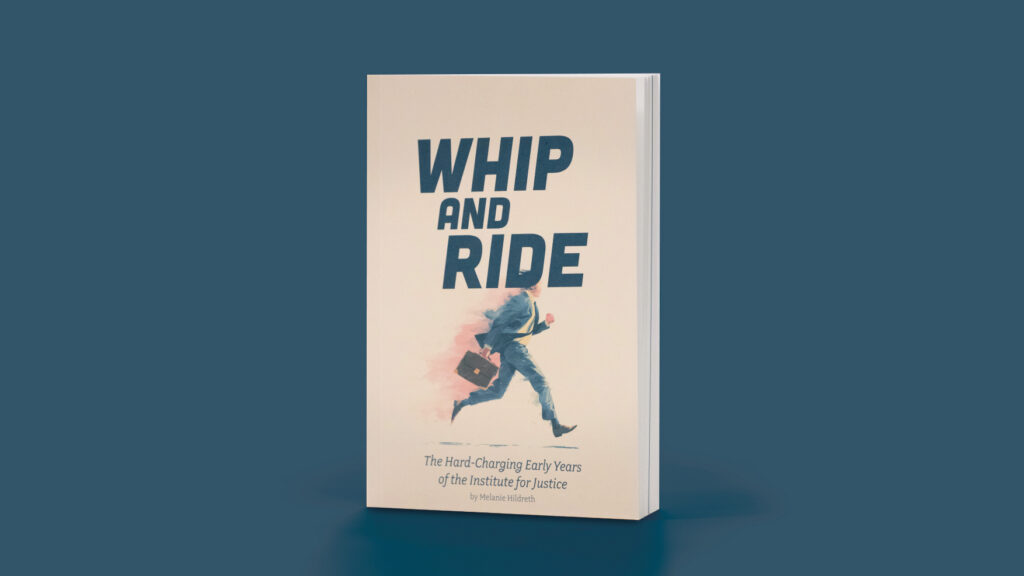
You Know IJ. Learn How It Began.

Liberty & Law
A Government of Laws, Not of Men: IJ’s Rule of Law Pillar

Liberty & Law
Raise A Glass To Entrepreneurship

Liberty & Law
Ninth Circuit Knock-Down Of Outrageous Federal Financial Surveillance

Liberty & Law
No License Required: The Long Fight For The Right To Speak
Liberty & Law
James King’s Case Is Over. The Work It Started Isn’t. Six Years Of IJ’s Project On Immunity And Accountability

Liberty & Law
IJ Challenges Warrantless CBP Raid

Liberty & Law
Then And Now: Training The Next Generation Of Litigators For Liberty

Liberty & Law
A Pain In The Zoning Code: Leavenworth Prohibits Home-Based Physical Therapy

Liberty & Law
Back To School & Back To Work: IJ Launches Education Entrepreneurship Project

Liberty & Law
From One Braiding Salon To Nationwide Reform

Liberty & Law
IJ Makes Headlines
Subscribe to get Liberty & Law magazine direct to your mailbox!
Sign up to receive IJ's bimonthly magazine, Liberty & Law, along with breaking news updates about the Institute for Justice's fight to protect the rights of all Americans.