Ninth Circuit Knock-Down Of Outrageous Federal Financial Surveillance
Last spring, the U.S. Department of the Treasury snapped its fingers and subjected more than 100 small money services businesses (MSBs) in California and Texas to a new legal regime. The new policy simultaneously imposed crushing paperwork burdens and invaded the financial privacy of thousands of average people. In the months that followed, we represented clients in three separate lawsuits and won injunctions against the Treasury’s overreach in all of them—and the 9th Circuit just affirmed.
Suddenly, everyday folks who use non-bank MSBs to do normal life things—like cash their paychecks, get money orders for rent or bills, transfer money to family, or exchange currency—were being reported to the feds.
Treasury’s subagency Financial Crimes Enforcement Network (FinCEN) requires MSBs to report to the federal government any cash transactions over $10,000. That had been the rule for decades—until March 2025, when FinCEN issued its “Southwest Border Geographic Targeting Order” (GTO) and, inexplicably and practically overnight, lowered the reporting threshold to just $200 in certain ZIP codes in two states.
Suddenly, everyday folks who use non-bank MSBs to do normal life things—like cash their paychecks, get money orders for rent or bills, transfer money to family, or exchange currency—were being reported to the feds, including their Social Security numbers, birth dates, and transaction details.
No suspicion of crime or wrongdoing. Just a federal financial dragnet. And it caused an avalanche of forms that our clients, whose businesses are modest operations, couldn’t possibly keep up with.
FinCEN claimed that these new regulations would stop money laundering by drug cartels. But FinCEN couldn’t explain why it thought cartels were laundering money in $200 increments—or why criminals wouldn’t be able to simply go to other non-affected ZIP codes to do their dirty deals. It couldn’t even decide what the new rule should be; the threshold was later raised to $1,000, and the geographic focus is (at best) a moving target.
Neither did FinCEN do anything to understand the burden the GTO would place on our clients. And it certainly paid no heed to the constitutional right to be free from unreasonable searches of private information. It just assumed it could demand whatever it wanted, with no serious justification.
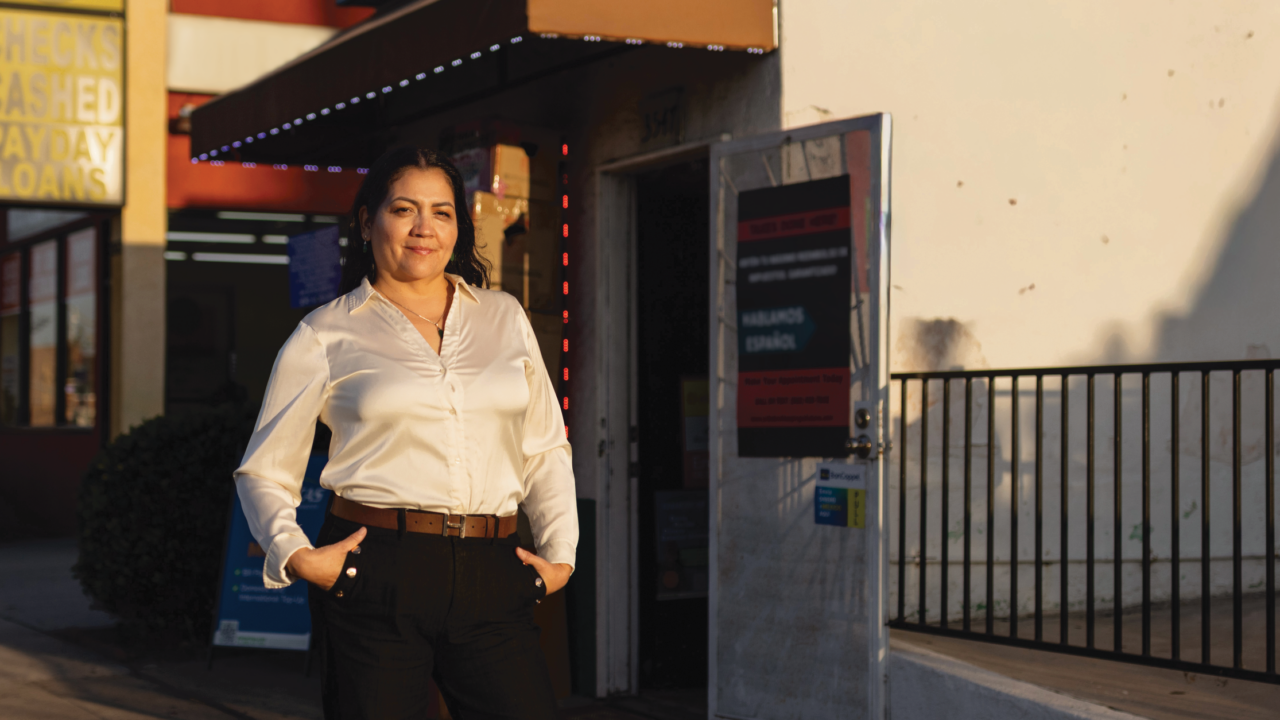
FinCEN assumed wrong. We sued in three federal courts, including in San Diego, California, on behalf of our client Esperanza Gomez and her one-woman business. The district court preliminarily enjoined the targeting order for the entire Southern District of California.
Our victory is a reminder that the rule of law forbids government agencies from rewriting the rules for thousands of Americans overnight with no justification.
Now the 9th Circuit has affirmed Esperanza’s win. Like the district court, the appellate court held that FinCEN violated the Administrative Procedure Act, the statute that governs how federal agencies must operate.
With the launch of IJ’s new rule of law pillar, this victory is especially timely. FinCEN imposed dragnet surveillance that swept up the private financial details of people suspected of nothing—without a warrant and without due process. Our victory is a reminder that the rule of law forbids government agencies from rewriting the rules for thousands of Americans overnight with no justification.
We currently await a decision in a parallel appeal. The 5th Circuit will hopefully affirm a lower court’s holding that the targeting order violated not just the APA, but also the Fourth Amendment’s limits on unreasonable searches. We look forward to soon providing another Liberty & Law update on what we hope is an additional victory against this unconstitutional overreach. Stay tuned!

Also in this Issue

Liberty & Law
VICTORY! Pennsylvania Supreme Court Unanimously Protects Landowners From Warrantless Spying

Liberty & Law
You Know IJ. Learn How It Began.

Liberty & Law
A Government of Laws, Not of Men: IJ’s Rule of Law Pillar

Liberty & Law
Raise A Glass To Entrepreneurship

Liberty & Law
No License Required: The Long Fight For The Right To Speak

Liberty & Law
Cert Granted! IJ Brings Excessive Fines And Forfeitures Back To The Supreme Court
Liberty & Law
James King’s Case Is Over. The Work It Started Isn’t. Six Years Of IJ’s Project On Immunity And Accountability

Liberty & Law
IJ Challenges Warrantless CBP Raid

Liberty & Law
Then And Now: Training The Next Generation Of Litigators For Liberty

Liberty & Law
A Pain In The Zoning Code: Leavenworth Prohibits Home-Based Physical Therapy

Liberty & Law
Back To School & Back To Work: IJ Launches Education Entrepreneurship Project

Liberty & Law
From One Braiding Salon To Nationwide Reform

Liberty & Law
IJ Makes Headlines
Subscribe to get Liberty & Law magazine direct to your mailbox!
Sign up to receive IJ's bimonthly magazine, Liberty & Law, along with breaking news updates about the Institute for Justice's fight to protect the rights of all Americans.