James King’s Case Is Over. The Work It Started Isn’t. Six Years Of IJ’s Project On Immunity And Accountability
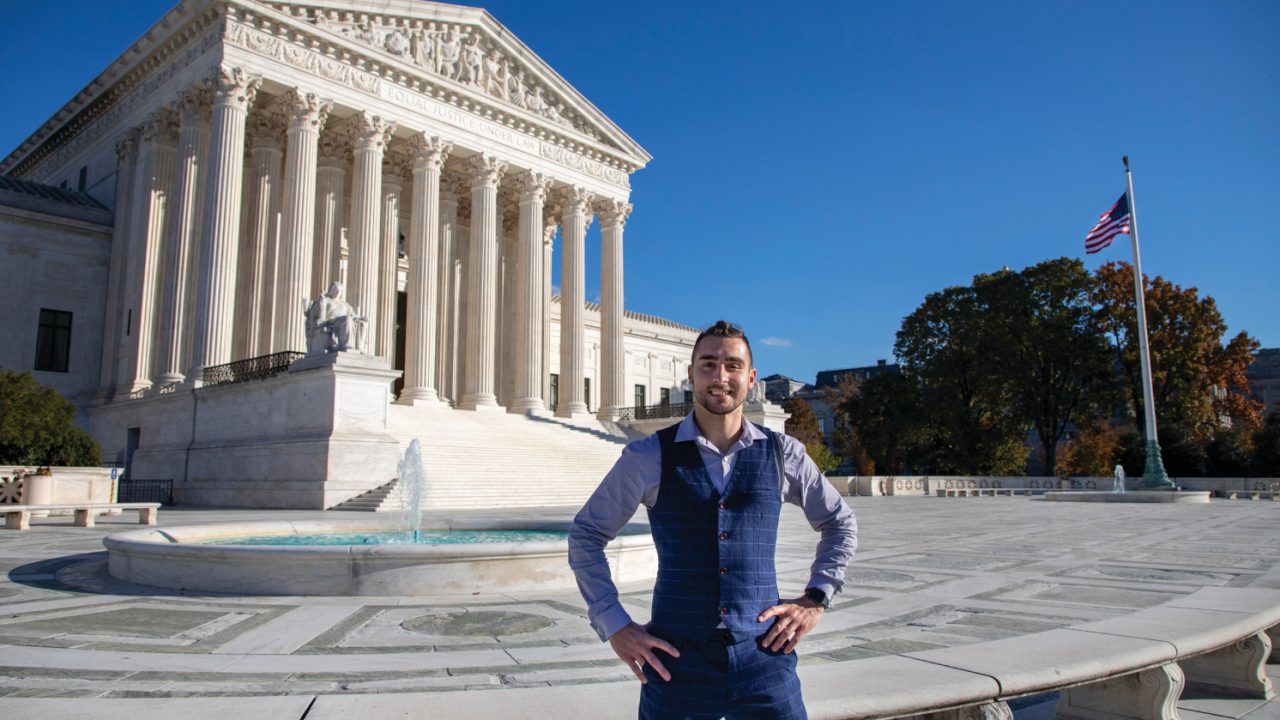
In July 2014, James King was walking to a summer job in Grand Rapids, Michigan, when two men stopped him, pinned him against an unmarked SUV, and took his wallet. James, a 21-year-old college student, thought he was being mugged, so he ran. The men tackled him, choked him unconscious, and beat him bloody. Concerned bystanders called 911.
The men were undercover members of a joint state-federal task force, looking for someone else entirely: a nonviolent local fugitive wanted for stealing empty cans and liquor. When uniformed officers arrived, they forced witnesses to delete evidence and charged James with felonies for resisting. A jury acquitted him.
Then James sued—but because several obstacles stood in his way, his case became the launchpad for IJ’s work to hold government officials accountable for violating the Constitution.
One obstacle was qualified immunity: a judge-made doctrine that often prevents victims of government misconduct from even getting their cases heard unless there is a previous court case denying immunity for the same misconduct.
Another was the task force itself. Because one of the plainclothes officers was an FBI agent and the other had been federally deputized, they claimed special protections reserved for federal employees—an even more impenetrable shield than qualified immunity.
Qualified Immunity Extends Beyond Police
When IJ launched the Project on Immunity and Accountability in January 2020, we had already encountered qualified immunity in civil forfeiture and other IJ cases. And we knew the doctrine had no basis in the law or the Constitution. So we started developing a strategic and comprehensive public interest program to challenge it and other immunity doctrines.
This was before the issue swept into public awareness later that spring—by which point it was everywhere, from editorial pages to Congress to the Supreme Court.
We were ready to make major moves. Our first was a petition to the Supreme Court on qualified immunity on behalf of Idaho mother Shaniz West. But in June 2020, the Supreme Court declined to hear it—and seven other qualified immunity cases.
That refusal told us something useful: The fix would not be coming from the Court, at least not soon. So IJ went everywhere else.
We drafted model state legislation. We built Americans Against Qualified Immunity, a grassroots coalition of police officers, veterans, pastors, and parents. We published Unaccountable, the largest study of qualified immunity ever conducted, so the argument for reform could run on data instead of anecdote. Legislatures listened; Colorado and New Mexico have both passed laws that let their citizens sue in state court without qualified immunity.
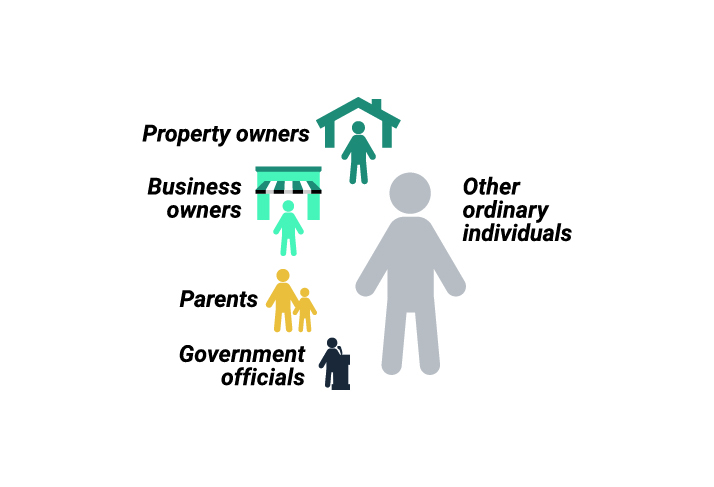
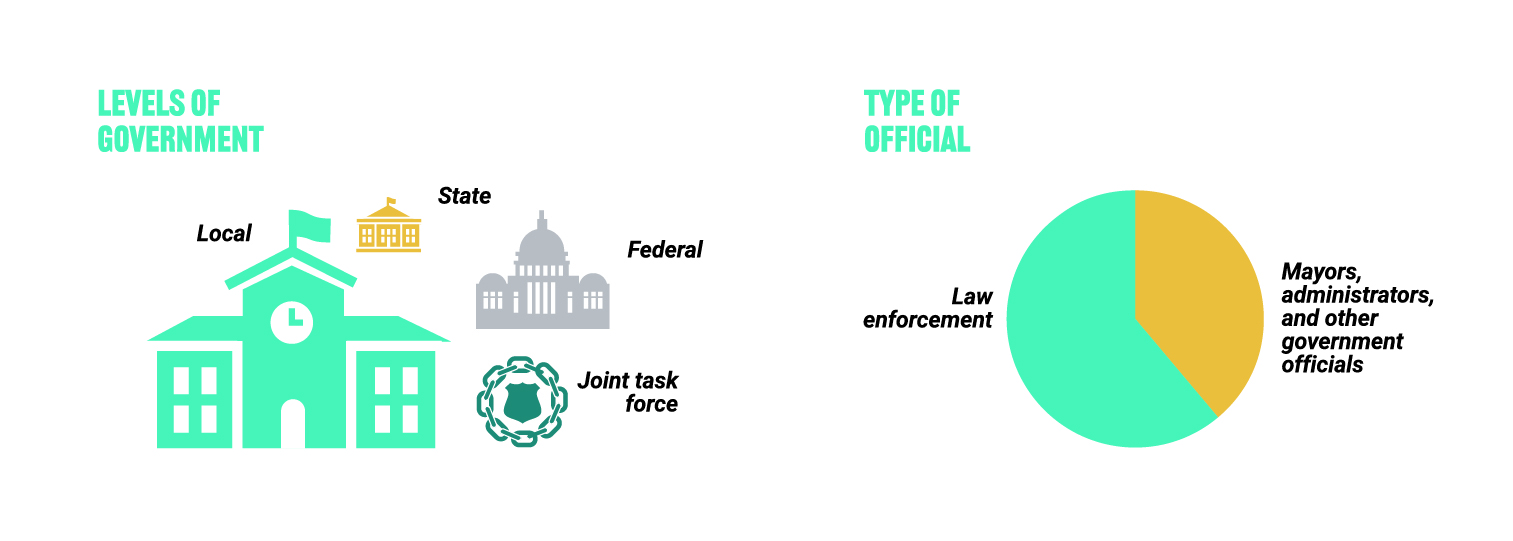
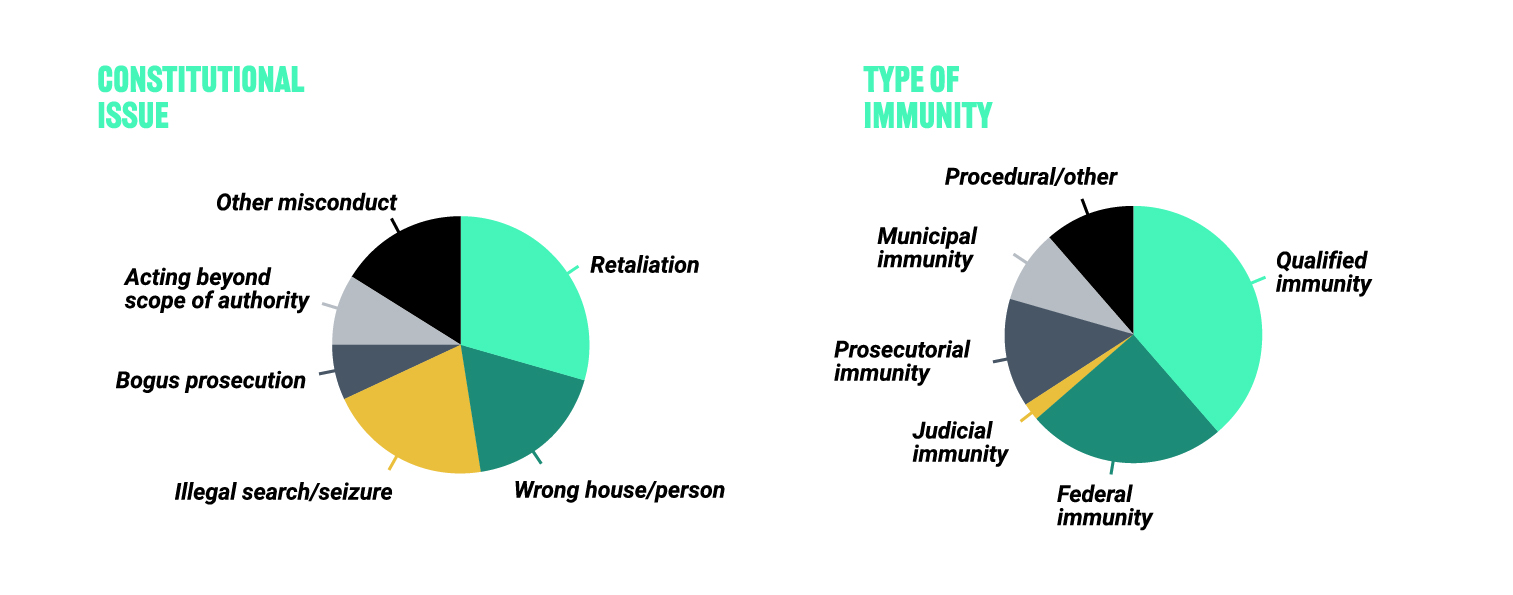
And we kept litigating, case by case. We’ve defeated qualified immunity numerous times. These cases all look different—representing parents, business owners, and even city council members in suits against not just law enforcement, but also mayors, prosecutors, and local bureaucrats. Yet they are all aimed at Supreme Court review whenever it is ready to rein in qualified immunity.
The Broad Landscape of
Immunity and Accountability Cases
Who We Represent
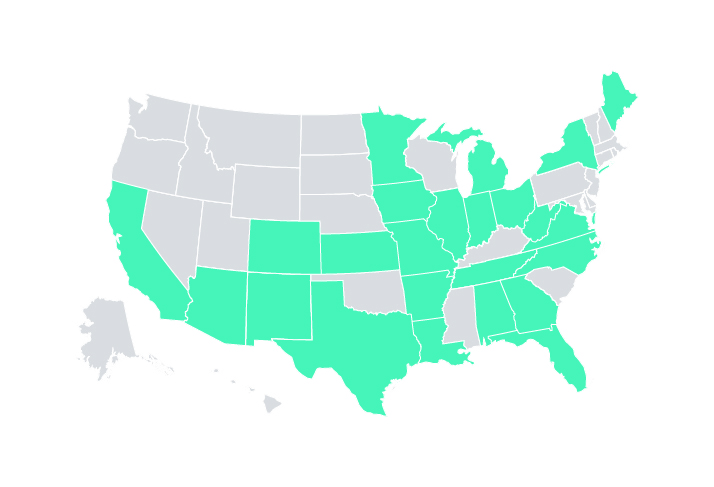
Where We Litigate
Who We Sue
What We Sue About
The Impenetrable Shield Of Federal Accountability
The other obstacle in James’ case—the task force—helped crystallize our approach to federal accountability.
Deputize a local officer onto one of roughly a thousand federal task forces, and he enjoys almost absolute federal immunity. That is how a St. Paul officer who fabricated evidence against Hamdi Mohamud, sending her to federal detention for nearly two years when she was 16, escaped accountability.
Immunity clings to federal officers even when they are off duty. In his personal time, a Homeland Security agent held Kevin Byrd at gunpoint to prevent him from looking into a drunk driving incident involving the agent’s son. The agent wasn’t acting in any official capacity, and the badge shielded him anyway.
We asked the Supreme Court to fix both cases. It declined.
Federal immunity is one of the most difficult obstacles a constitutional suit can face. It has become a key focus of our work because, for IJ, that difficulty presents opportunity for real and lasting change.
Since 1971, the primary route to sue a federal agent for a constitutional violation has run through a decision called Bivens. In recent decades, courts have narrowed it so far that a federal badge effectively puts federal officers into a constitution-free zone.
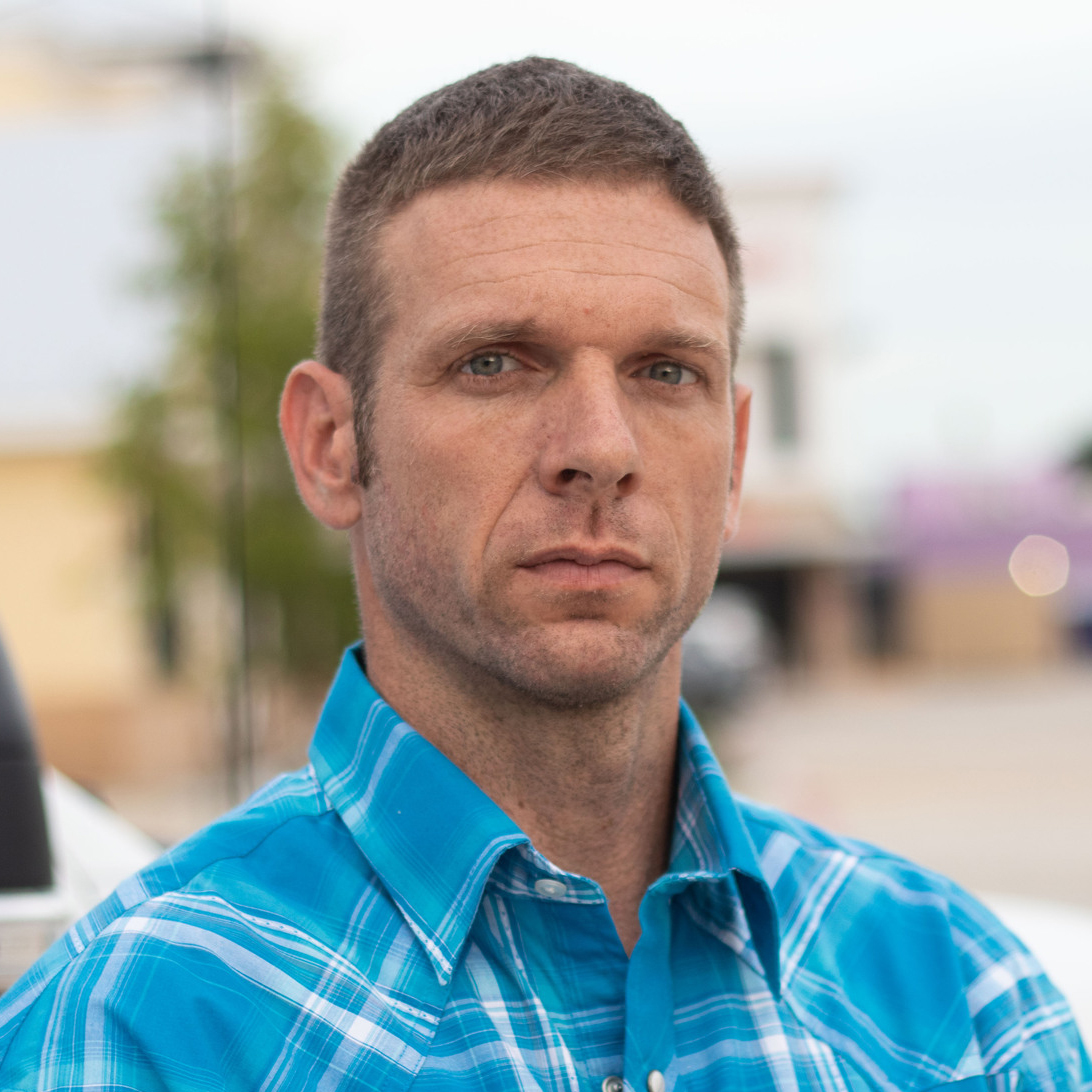
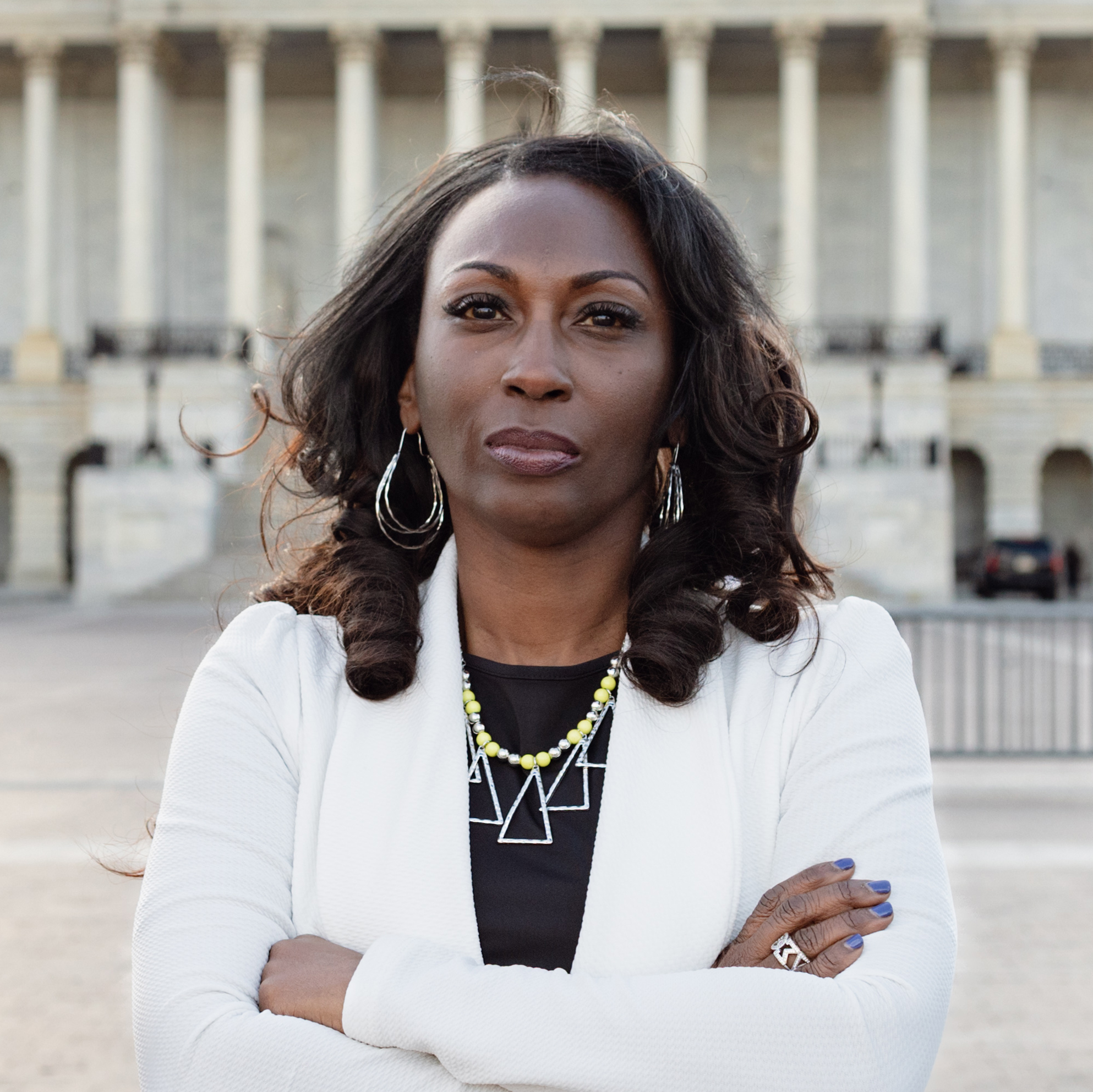
IJ fights for accountability on behalf of clients like Kevin Byrd, held at gunpoint by an off-duty Homeland Security agent, and Trina Martin, whose home was wrongly raided by an FBI SWAT team.
A New Approach Pays Off
So we changed instruments. If courts would not let our clients sue federal employees under the Constitution, we would sue their employer—the United States government—under the Federal Tort Claims Act (FTCA). It’s a complicated statute riddled with exceptions. And though it isn’t designed for constitutional claims, it’s our best first step.
We first encountered the FTCA from the wrong end. In James’ case, the government eventually stopped defending the officers’ conduct at all, preferring to hide behind a technicality buried in the FTCA. Fighting that technicality taught us the law inside and out. What was once used to close a door for James, we now use to open doors for others.
Last year, that approach produced a unanimous Supreme Court victory for Trina Martin. An FBI SWAT team raided her home by mistake, waking her 7-year-old son at gunpoint. The Court overturned one immunity crafted to shield the FBI agents and refused to expand another in one of the FTCA’s exceptions. Trina’s case now proceeds in the 11th Circuit.
Nearly a dozen cases are lined up behind it. Again, the circumstances vary, from wrong-house raids and mistaken-identity arrests to warrantless searches and detentions. Some involve immigration enforcement, but these cases aren’t about immigration policy. Leo Garcia Venegas’ case, for example, is about federal officers entering private property without a warrant and detaining U.S. citizens without cause.
These cases are different manifestations of the same problem: Federal officials can violate rights with impunity. Each case helps us expose the accountability gap and build a path to ensure that the Constitution’s protections are enforceable in court.
This past June, the Supreme Court declined to hear James’ case for a third time. After more than a decade, his fight for accountability ended before it ever really began. But James’ case left a lasting mark, launching a project that has now litigated more than 50 cases across 24 states and repeatedly defeated obstacles much like those he faced.
What started with immunity will end with accountability. Whether it takes years or decades, IJ will see to it.



Also in this Issue
Liberty & Law
VICTORY! Pennsylvania Supreme Court Unanimously Protects Landowners From Warrantless Spying
Liberty & Law
You Know IJ. Learn How It Began.

Liberty & Law
A Government of Laws, Not of Men: IJ’s Rule of Law Pillar

Liberty & Law
Raise A Glass To Entrepreneurship
Liberty & Law
Ninth Circuit Knock-Down Of Outrageous Federal Financial Surveillance
Liberty & Law
No License Required: The Long Fight For The Right To Speak

Liberty & Law
Cert Granted! IJ Brings Excessive Fines And Forfeitures Back To The Supreme Court
Liberty & Law
IJ Challenges Warrantless CBP Raid
Liberty & Law
Then And Now: Training The Next Generation Of Litigators For Liberty

Liberty & Law
A Pain In The Zoning Code: Leavenworth Prohibits Home-Based Physical Therapy

Liberty & Law
Back To School & Back To Work: IJ Launches Education Entrepreneurship Project

Liberty & Law
From One Braiding Salon To Nationwide Reform

Liberty & Law
IJ Makes Headlines
Subscribe to get Liberty & Law magazine direct to your mailbox!
Sign up to receive IJ's bimonthly magazine, Liberty & Law, along with breaking news updates about the Institute for Justice's fight to protect the rights of all Americans.