Precedent Established by IJ May Help Louisiana Man Arrested Over Facebook Posts
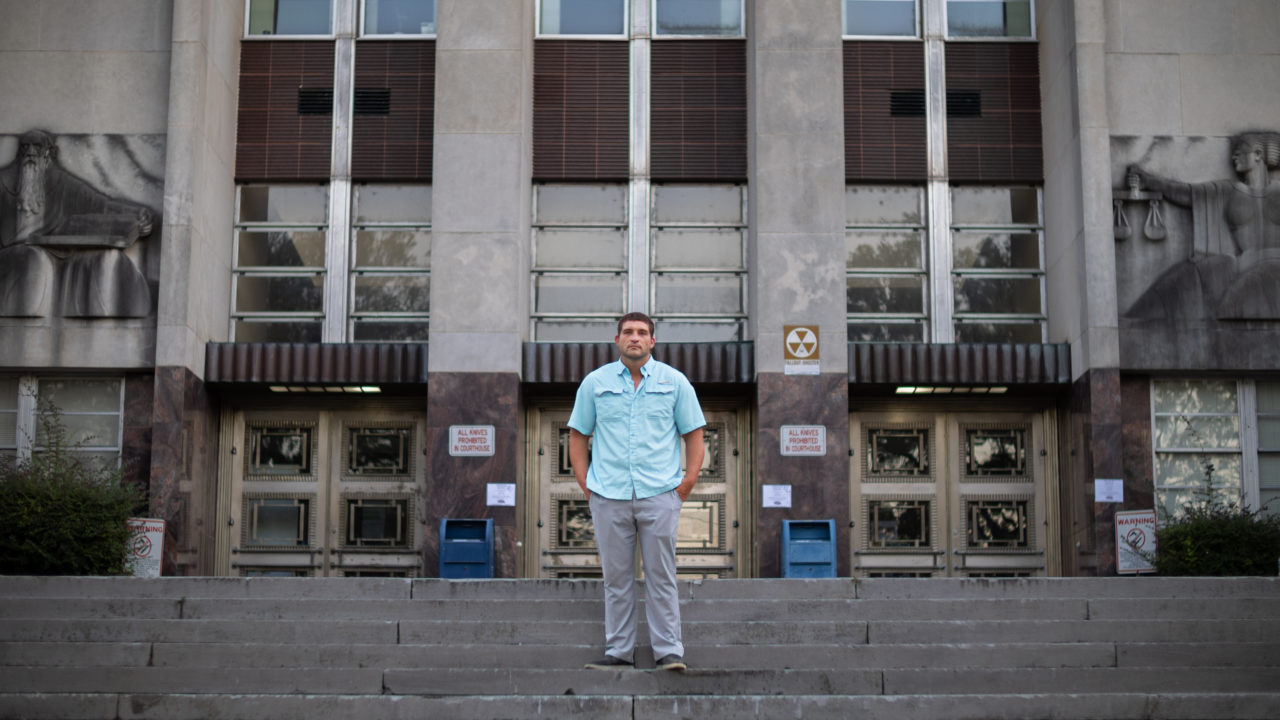
Arden Wells often criticizes Tangipahoa Parish Sheriff Gerald Sticker on Facebook. In July 2025, those posts got him in trouble. The sheriff’s office arrested him twice. Earlier this month (in February), District Attorney Scott Perrilloux of the 21st Judicial District told Fox 8 that his office rejected three counts brought against Arden from these arrests. Although Attorney General Liz Murill’s office said it is still reviewing the cases, existing precedent set by the Institute for Justice (IJ) provides strong protections for Arden’s speech, especially in Louisiana.
Sheriff Sticker said in a release that the arrest was made because “the law does not allow someone to falsely yell ‘fire’ in the middle of a theater to create panic” nor to “falsely publicize a concerning event like an inmate escape to scare people…” The first line of argument refers to the 1919 U.S. Supreme Court case, Schenck v US, which allowed censorship of anti-war pamphlets under the “clear and present danger” test, comparing them to “falsely shouting fire in a theater.” But the Supreme Court has since effectively overruled that test. Now, speech only loses First Amendment protection in extreme circumstances, such as when it’s a true threat or is likely to cause imminent lawlessness.
Fortunately for Arden, Sheriff Sticker’s exact line of argument was rejected in the case Bailey v. Iles , where IJ represented Waylon Bailey in a lawsuit regarding his arrest over a Facebook post he made about COVID-19 back in 2020. Waylon made a joke comparing the bizarre COVID-19 situation to a zombie apocalypse, joking that the local sheriff’s office would soon be shooting “the infected.” To make it crystal clear that it was a joke, the post ended with a hashtag, “#weneedyoubradpitt,” in reference to the movie star’s zombie film World War Z and a series of silly emojis.
Although few people saw Waylon’s post and no one was alarmed by it, the sheriff’s office for Rapides Parish, Louisiana, found Waylon at his garage, arrested him, and took him to jail. Similar to Arden’s situation, the Rapides Parish Sherrif’s Office accused Waylon of violating the state’s anti-terrorism laws. But the district attorney dropped the case.
Waylon sued over the unconstitutional detention but his case was thrown out by a district court that cited the century old Schenck decision despite the Supreme Court effectively overruling it decades ago. Waylon partnered with IJ to appeal his case to the 5th U.S. Circuit Court of Appeals. The court held that the arrest violated his First Amendment right to free speech, squarely rejecting the “clear and present danger” test from Schenck. And it held that the deputy who spearheaded Waylon’s arrest was not entitled to qualified immunity because “decades of Supreme Court precedent” put the deputy on notice that Waylon’s joke was protected speech. With his case revived, Waylon was later awarded damages at trial for the arrest.
With Sheriff Sticker mentioning this line of argument in his statement on Arden’s arrest, it is no surprise that the local DA doesn’t want to move forward with the criminal charges. Should Arden seek to file a lawsuit, he is going to have the Bailey decision standing firmly in his corner.
This is a potent example of how IJ’s success in fighting against First Amendment retaliation sets lasting precedents protecting freedom of speech. Last week, an Iowa federal court ruled that Noah Petersen’s rights were violated when he was arrested for criticizing his mayor and police department at a city council meeting during the public comment period. In 2024, the U.S. Supreme Court ruled in Gonzalez v. Trevino that American’s First Amendment rights are violated when they are arrested in retaliation for their speech.
Your Rights Are Worth Defending
Help protect constitutional rights and challenge abuses of government power.
More on First Amendment Retaliation

First Amendment Retaliation
Public Interest Law Firm Demands Philadelphia City Officials Stop Retaliation Against Businesses Who Spoke Against Curfew Law
First Amendment Retaliation
Legal Scholars and Public Interest Law Firms Across Ideological Spectrum Back Sylvia Gonzalez in Landmark Supreme Court Fight Against Government Retaliation

First Amendment Retaliation