Animal Sanctuary Will Appeal to North Carolina Supreme Court After Appellate Court Upholds City Ban
Family-operated sanctuary in Winston-Salem is fighting rules that threaten its ability to care for special needs animals.
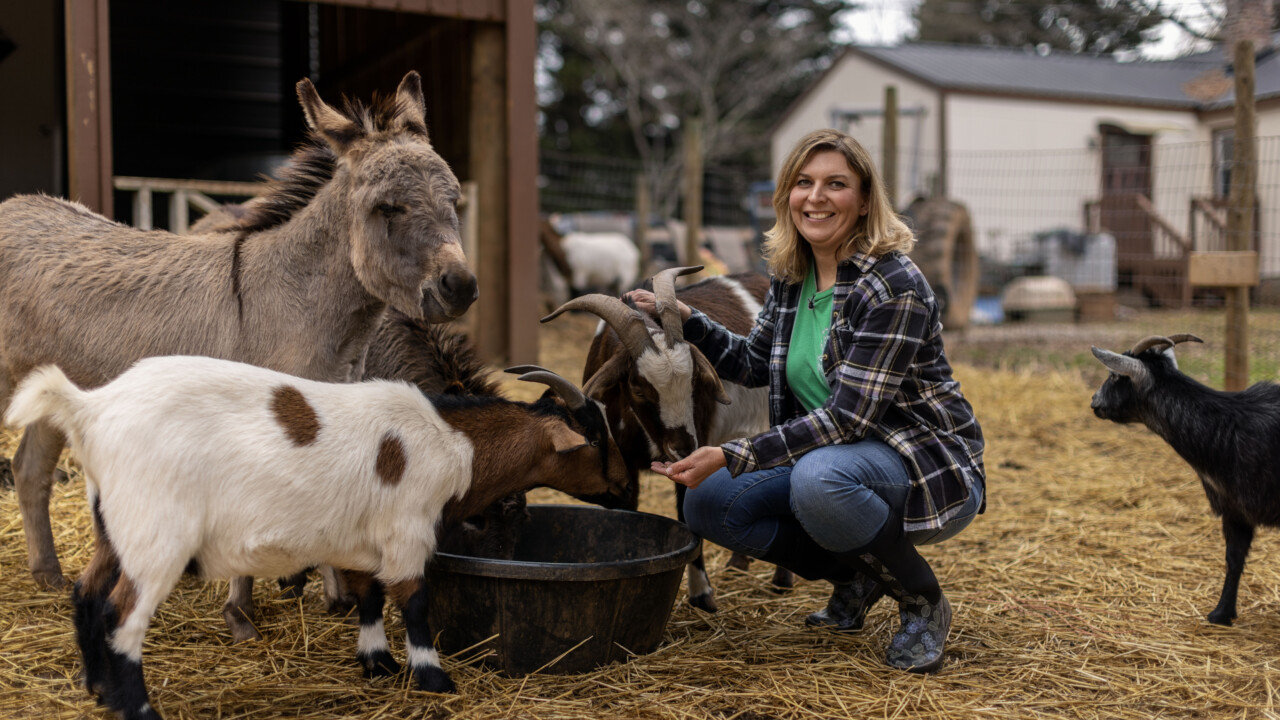
WINSTON-SALEM, N.C.—Fairytale Farm Animal Sanctuary will appeal to the North Carolina Supreme Court after a state appeals court ruled that Winston-Salem can restrict the nonprofit from operating. Sanctuary owner Kimberly Dunckel sued the city after it shut down Fairytale Farm. The Dunckels are represented by the Institute for Justice (IJ), a nonprofit public interest law firm that defends property rights nationwide.
“We’re disappointed at the ruling but looking forward to taking this to the North Carolina Supreme Court,” said Kimberly. “We now operate a second location that allows us to continue helping animals in need, including those the county relies on us to support. But the sanctuary has always been at the heart of our work. If it remains off limits to the animals who need it most, the public, and our volunteers, it will significantly limit our ability to serve both animals and the community. We remain committed to providing safety for the animals who depend on us.”
Fairytale Farm is a refuge for abused and neglected donkeys, goats, rabbits, ducks, and more. After registering as a nonprofit in 2021, the Dunckels hosted groups of Girl Scouts and homeschoolers, held themed events for people to meet with the animals, and welcomed groups of volunteers to help with care and upkeep of the sanctuary. The sanctuary quickly became popular in the community, and the Dunckels’ neighbors all supported the nonprofit and its activities.
But, in early 2023, even though the sanctuary had community support and didn’t cause any problems, the city’s zoning officials ordered the Dunckels to close the sanctuary completely. Everything that the Dunckels want to do with the sanctuary is already allowed in their neighborhood. It’s legal for the Dunckels to keep all the animals on their property. It’s legal for Kim to run the nonprofit from her home. And it’s legal for other businesses, such as home day cares, to operate and host a similar number of visitors in the same neighborhood. But as soon as the Dunckels combine those things, they become illegal.
The city’s order forced the Dunckels to close their doors to the public and severely hampered their ability to fundraise and care for the animals. It would also prevent them from caring for animals on their property at all with the help of the sanctuary.
“North Carolina’s Constitution protects Kim’s right to run a lawful business,” said IJ Attorney Caroline Grace Brothers. “We’re appealing this decision because zoning laws that prohibit a harmless and much-needed nonprofit animal sanctuary run afoul of that right.”
This case is part of IJ’s Zoning Justice Project, which aims to protect and promote the freedom to use property. In South Carolina, IJ is representing a swim teacher banned by the city from providing lessons in her backyard. In Washington state, IJ is representing a private soup kitchen wrongly closed by its city. And in Michigan, IJ is helping property owners realize their vision of a green cemetery on their forest land.
More on Private Property

Private Property
Court Says Marion County Must Clearly State What Crime Was Committed Before Taking Money Seized at FedEx Hub
Private Property
South Bend Mom’s Fight for Compensation After Police Wrecked Her Home Heads to State Court After Supreme Court Turns Down Appeal

Private Property
