Food Trucks Are Perfect Vehicles For Cutting-Edge Challenges

Food trucks are amazing. They allow entrepreneurs of limited means to pursue their dreams. They provide delicious options to consumers. They boost nearby businesses—including restaurants—by attracting more customers to the area. And they are the perfect vehicles for a variety of constitutional claims.
When IJ first started representing food trucks over a decade and a half ago, the cases focused on economic liberty. Local officials would ban this new competition, so we would represent food truck owners who just wanted to offer consumers more choices. We often won.
Continued success following our tried-and-true approach might have been enough for many law firms. But not IJ. We pride ourselves on bringing cutting-edge constitutional cases, and it turns out that food trucks can serve up a variety of challenges. Two recent victories illustrate the point.
In Jacksonville, North Carolina, Nicole Gonzalez wanted to invite food trucks onto her private property to attract more customers to her store. The only problem? Her property was too close to restaurants to comply with Jacksonville’s ban on competition.
So we brought a property rights case on Nicole’s behalf. And since the city’s efforts to hamstring food trucks also included sign restrictions and exorbitant fees, we challenged those, too. We even included an economic liberty claim, relying on unique provisions in the North Carolina Constitution.
We won every claim. The government initially attempted to have our case dismissed, but we appealed and created terrific precedent at the state appellate court saying that our legal arguments were correct.
Then, after returning to the trial court to prove our claims, the other side tried to stop us from obtaining a binding judgment by repealing the provisions. That way, they could bring back the provisions later.
Again, the city was wrong. Since we had sought nominal damages for past rights violations, the city’s capitulation could not stop us from obtaining a final judgment on those harms. At the hearing, the court ruled that our evidence proved that the city had violated every single constitutional provision we claimed. This judgment means that the unconstitutional ordinances will not return.
Another example was in Parksley, Virginia. We initially expected a typical protectionist food truck ban. The situation turned out to be anything but typical. Outraged that our clients would dare to park their own food truck on their own property next to their own store and compete with restaurants owned by local officials’ friends, one official physically cut a water line connected to the food truck. Then, when the truck’s owners spoke to the media, city officials became even angrier and revoked their food truck permit.
These complications might have dissuaded some attorneys, but for IJ, they made the case more attractive. We brought claims about whether cutting a water line constituted a Fourth Amendment seizure. And whether the out-of-control official was protected by qualified immunity. And whether the city was also liable for his actions even though he was out of control. And whether the city was allowed to revoke a permit just because officials were angry about media attention.
So far, we have mostly won. The federal district court agreed with us that the official violated the Fourth Amendment when he cut the line. And that qualified immunity did not protect the official from liability. And that the city is liable, too.
The only place where the court disagreed was when it held that even though the city retaliated against the food truck owners by revoking their permit, another part of the code might still have prevented food trucks. This led the court to mistakenly think that the retaliation did not cause any extra harm. So we will appeal that issue to the federal appellate court. Additionally, the city will appeal all the claims we won; we will now get to create federal appellate precedent on those as well.
As food trucks have become too popular to completely ban, city officials have devised new and creative ways to limit them. Rather than dissuade us, this only makes the cases more attractive as IJ continues to create new (and delicious) precedent.
Justin Pearson is an IJ managing attorney.
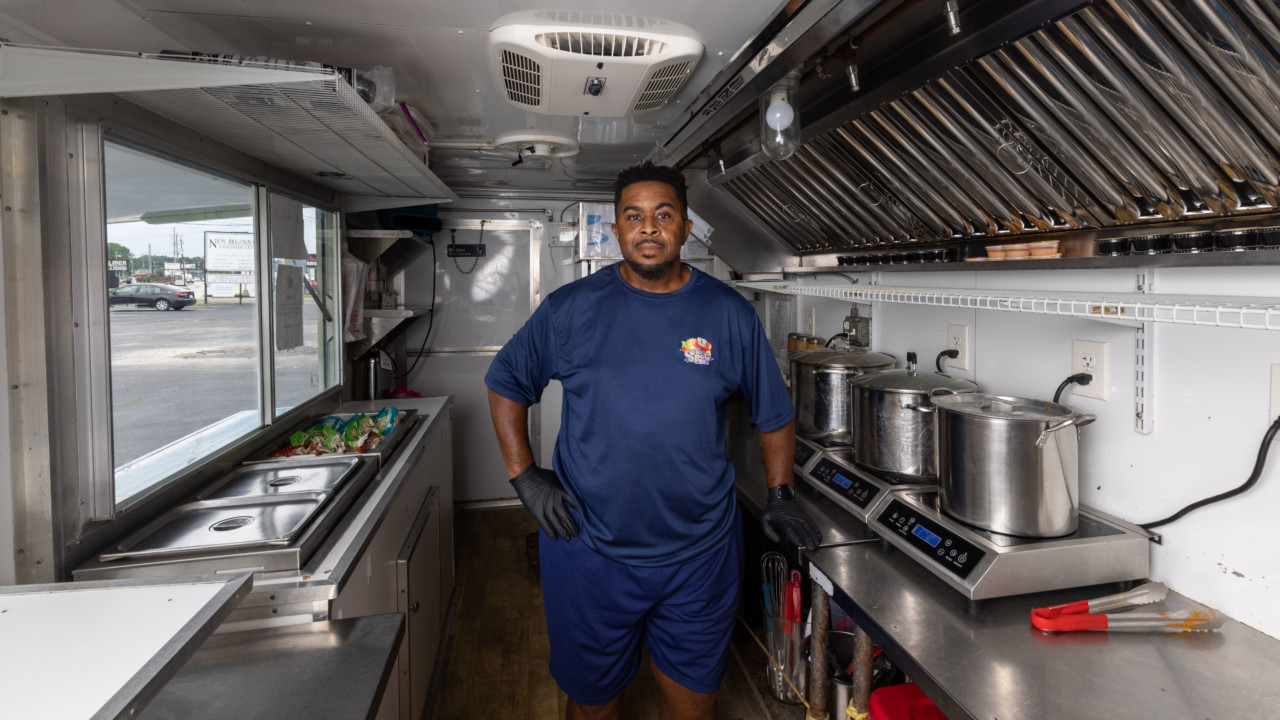

Also in this Issue
Liberty & Law
Winning The Fight Against Bogus Blight
Liberty & Law
Two Wins For The First Amendment
Liberty & Law
Policing For Profit—And Without Due Process
Liberty & Law
250 Years Of Declaring–And Enforcing–Our Rights

Liberty & Law
Reining In The Regulators

Liberty & Law
Challenging The Plate-Reader Panopticon From Coast To Coast

Liberty & Law
Justice Delivered Federal Court Closes The Book On Pagedale’s Policing-For-Profit Scheme
Liberty & Law
IJ To Put Agency Judges On Trial At The U.S. Supreme Court

Liberty & Law
Closing The Open Fields Loophole In Idaho
Liberty & Law
IJ Updates: Spring 2026

Liberty & Law
IJ Makes Headlines
Subscribe to get Liberty & Law magazine direct to your mailbox!
Sign up to receive IJ's bimonthly magazine, Liberty & Law, along with breaking news updates about the Institute for Justice's fight to protect the rights of all Americans.