Victory: Tennessee Court Scraps Attorney Gag Order Rule Following Federal Lawsuit
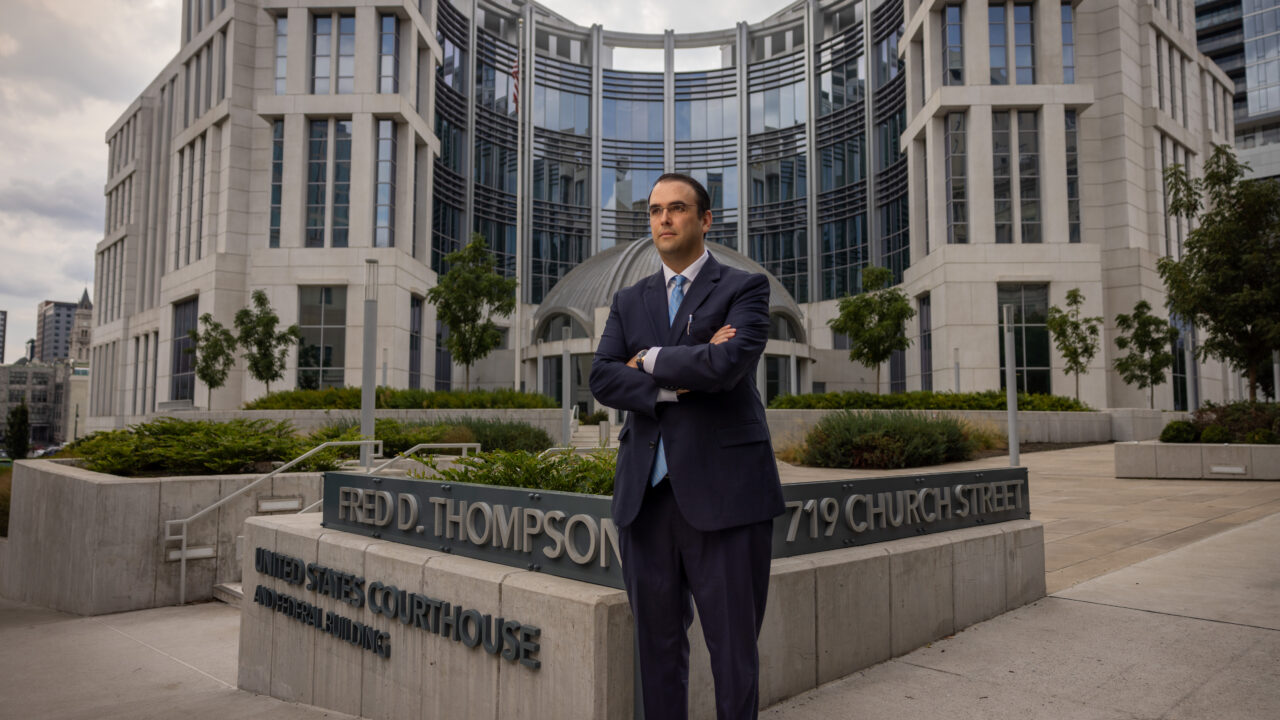
NASHVILLE, Tenn.—On Thursday afternoon, judges from the U.S. District Court for the Middle District of Tennessee amended the court’s local rules to remove a provision that prevented attorneys from discussing their cases with the media and the public. The changes were sparked by a federal lawsuit, filed by the Institute for Justice (IJ) on behalf of local civil rights attorney Daniel Horwitz in October 2024.
“This is a huge win for the First Amendment in Middle Tennessee,” said IJ Attorney Jared McClain. “Attorneys have a right to discuss their cases, and the public has a right to know what the government and its contractors are doing wrong.”
Daniel was first subjected to the court’s gag order rule in July 2022, when he spoke with media about a wrongful death lawsuit he had filed against a private prison company that operates for the Tennessee government. The magistrate who imposed the gag order prohibited Daniel from giving additional interviews, forced him to purge his social media of all mentions of the case, and warned him he would be held in contempt of court if he continued to discuss his cases publicly. Daniel filed seven more lawsuits against the prison company, CoreCivic, but was unable to discuss any of them with media because of the gag order rule, despite receiving requests for comment.
“I’m thrilled that my First Amendment rights have been vindicated, but more importantly, I’m thrilled that I can resume informing the public about civil rights abuses across Middle Tennessee,” said Daniel. “This important victory also would not have been possible without the dedicated civil rights lawyers at the Institute for Justice and Southeastern Legal Foundation, to whom I will always be grateful.”
The district court dismissed the case in January, holding that Daniel lacked standing to challenge the rule that restricted his speech. That decision is currently on appeal in the U.S. Court of Appeals for the Sixth Circuit. Then, last month, the district court proposed amendments to the local rule and sought public comment. Because the proposed amendment did not address all the First Amendment concerns raised in IJ’s lawsuit, IJ submitted a public comment outlining the ways the proposed rule was still unconstitutional. In response to those comments, the court decided to scrap the speech restrictions altogether. The rule now just says that attorneys are bound by Tennessee’s rules of professional conduct, which was always the case.
“Discussing cases with the media and public is a huge part of public interest litigation, including the work that we do here at IJ,” said IJ President and Chief Counsel Scott Bullock. “This case showed the importance of being able to talk with the public, because the judges ultimately changed the rule due to public comment.”
With the local gag order rule repealed, the Middle District of Tennessee joins the vast majority of federal courts, including the Western District of Tennessee, in having no rule that restricts attorneys’ public discussion of their case.
More on First Amendment

First Amendment
National Law Firm Warns Maine Town: Fines for Autistic Girl’s Lawn Ornaments Violate the First Amendment

First Amendment
Virginia Counselor Wins Lawsuit Challenging District of Columbia’s Restrictions on Teletherapy Sessions

First Amendment