Maine Family Sues Town After Officials Declare That Autistic Daughter’s Lawn Decorations Are Illegal “Advertising Signs”
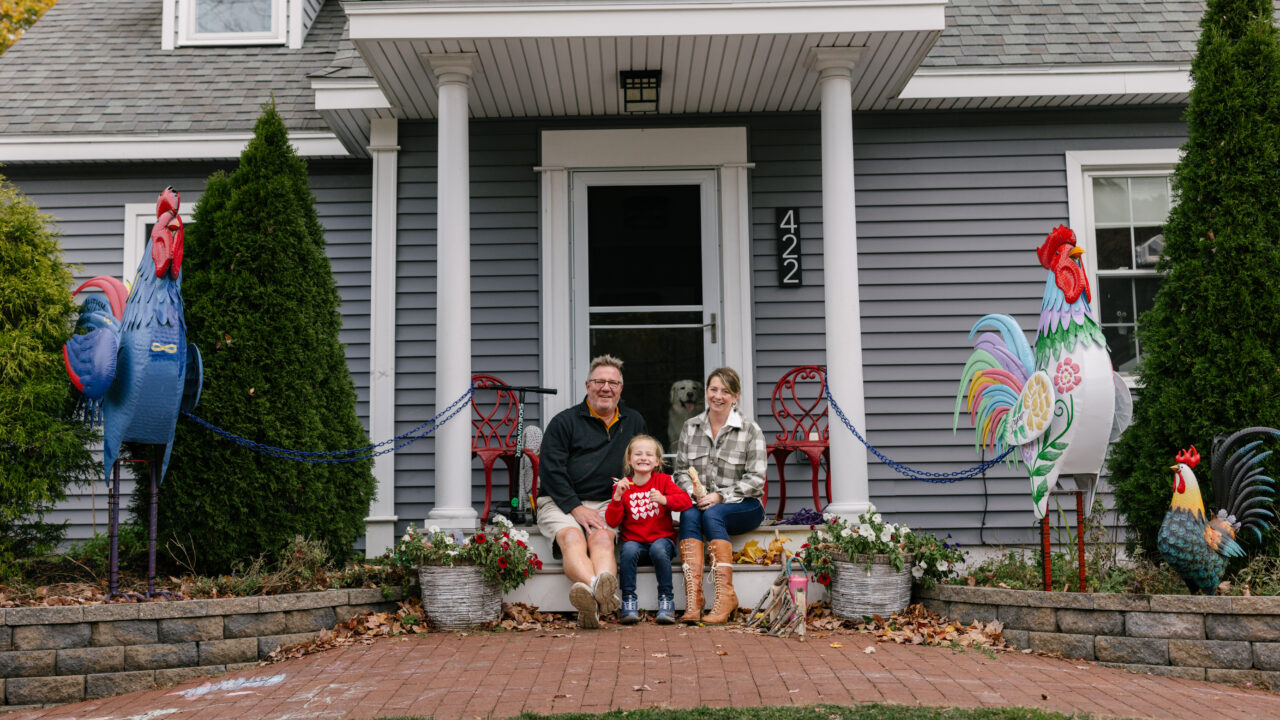
OGUNQUIT, Maine—A Maine family filed a federal lawsuit against the town of Ogunquit on November 16 after officials fined them for the tin rooster statues in front of their home, declaring the roosters “advertising signs” for the family’s breakfast restaurant. Dave and Sara LeBlanc teamed up with the Institute for Justice (IJ) to file the lawsuit, which argues that Ogunquit’s enforcement of its sign code violates their First Amendment rights.
Dave and Sara bought the decorations for their six-year-old adopted daughter, Pyper, who has autism and has always had a special interest in roosters. They’re a source of comfort for her, easing her transition from home to school each weekday morning. Dozens of people in Ogunquit and neighboring towns have put up their own rooster statues to show support for Pyper and her family, turning them into a symbol of autism awareness.
But in the spring of 2026, the town’s code enforcement officer decided the roosters weren’t yard art at all. Because the LeBlancs own the Omelette Factory, a beloved local breakfast spot attached to their home, the town declared the statues “advertising signs” that exceed the sign code’s size limits, fined the family several hundred dollars, and ordered the roosters removed.
“The government doesn’t get to decide what Pyper’s roosters mean and then punish her family for it,” said IJ Attorney Daniel Woislaw. “A tin rooster in a front yard is art, and art is protected by the First Amendment. Calling something ‘commercial’ isn’t a loophole towns can use to regulate art or the people that display it.”
The LeBlancs appealed to the town’s Zoning Hearing Board, which refused to lift the fines. The Board granted only a narrow variance for Pyper’s disability: two roosters could stay, but only if incorporated into a railing attached to the residence. The LeBlanc home has no railing. When the family chained two roosters to the pillars by the front door instead, code enforcement cited them again.
“The roosters are a symbol of one thing: how much we love our daughter,” said Dave LeBlanc. “But the town made up an entirely different meaning for them.”
When the LeBlancs were forced to cull their flock, friends and neighbors stepped forward to “foster” the roosters. Today, dozens of homes and businesses across Ogunquit and neighboring towns display identical tin roosters, which have become a community symbol of autism acceptance. The town has not fined, cited, or even warned anyone else.
“Every time Pyper spots another rooster in someone’s yard, her face lights up,” said Sara LeBlanc. “This town has embraced her. We wish the town government would too.”
“Ogunquit isn’t regulating roosters, it’s regulating the LeBlancs,” said IJ Attorney Griffin Brunk. “Punishing one family for a display everyone else is allowed to enjoy is textbook speaker-based discrimination.”
The LeBlancs are asking the court to declare the town’s enforcement unconstitutional and to bar Ogunquit from fining, citing, or prosecuting them for displaying the roosters.
IJ’s fight against similar violations of small business owners’ free speech rights includes a recent federal injunction protecting a student-painted donut mural in Conway, New Hampshire, a 2019 victory for a North Dakota saloon’s mural, and a 2017 win for a Florida game store’s inflatable Mario.
More on First Amendment

First Amendment
National Law Firm Warns Maine Town: Fines for Autistic Girl’s Lawn Ornaments Violate the First Amendment

First Amendment
Virginia Counselor Wins Lawsuit Challenging District of Columbia’s Restrictions on Teletherapy Sessions

First Amendment
