Bound By Oath
Podcast series taking a close look at the history of the Constitution
Season 4 — Judge Made Doctrines
Latest episode
Younger abstention | Season 4, Ep. 4
In 1966, Los Angeles officials tried to put a man in prison for handing out leaflets in protest of a fatal police shooting. Today, we know the case as Younger v. Harris, which kicked off the doctrine of Younger abstention, the bane of many a civil rights plaintiff. On this episode, we examine the origins, the impact, and the relentless expansion of the doctrine.
Guests, resources & transcript
Resources
Fred Smith & Peter O’Neill, The Forgotten Face of “Our Federalism”
Fred Smith, Younger and Older Abstention
John Giammatteo, The New Comity Abstention
Oath or Affirmation. (And Treason.) | Season 4, Ep. 3
On this episode, we recover a lost part of the Fourth Amendment that the Supreme Court essentially erased in 1960. In the case of Jones v. United States,…
On this episode, we recover a lost part of the Fourth Amendment that the Supreme Court essentially erased in 1960. In the case of Jones v. United States, the Court ignored text, history, and tradition, and disfigured the Warrant Clause, allowing law enforcement to knock down doors based on mere hearsay and with scant consequences for lying or mistakes. Jones was wrong the day it was decided, and the Court should overturn it.
Guests
Laurent Sacharoff, Hofstra Law
Resources
Laurent Sacharoff, The Broken Fourth Amendment Oath
Miguel F.P. de Figueiredo, Brett Hashimoto & Dane Thorley, Unwarranted Warrants? An Empirical Analysis of Judicial Review in Search and Seizure
Paul Finkelman, The Tragedy of Felix Frankfurter
Needless Friction. And Treason.
On this episode: the story of Pullman abstention, the first of several abstention doctrines the Supreme Court invented to let federal judges decline to decide cases that they…
On this episode: the story of Pullman abstention, the first of several abstention doctrines the Supreme Court invented to let federal judges decline to decide cases that they have jurisdiction to decide.
Resources
Lauren Robel, Riding the Color Line: The Story of Railroad Commission of Texas v. Pullman Co.
Lael Weinberger, Frankfurter, Abstention Doctrine, and the Development of Modern Federalism: A History and Three Futures
Martin Redish, Abstention, Separation of Powers, and the Limits of the Judicial Function
David L. Shapiro, Jurisdiction and Discretion
Judge Selya, Certified Madness: Ask a Silly Question
Rooker and Feldman and Treason | Season 4, Ep. 1
Next week, the Supreme Court is going to hear a huge civil rights case that no one is talking about—because the legal issue before the Court is the…
Next week, the Supreme Court is going to hear a huge civil rights case that no one is talking about—because the legal issue before the Court is the Rooker-Feldman doctrine, an obscure and slightly treasonous doctrine that lets federal judges throw worthy cases out of court without reaching the merits.
Resources
Pedagogy and Politics, Jay Feinman and Marc Feldman
Timothy Egan, A Fever in the Heartland
T.M. v. Univ. of MD Medical System IJ amicus brief
Hohenberg v. Shelby County, TN
Previous seasons
Season 3 — Property Rights
Indian Country | Season 3, Ep. 14
In our final episode of the season, we head to Indian Country and survey several strands of Supreme Court precedent that prevent Native Americans from putting their property to peaceful and productive use.
Resources
Adam Crepelle, Becoming Nations Again: The Journey Towards Tribal Self-Determination
Terry Anderson, Renewing Indigenous Economies
Adam Crepelle, White Tape and Indian Wards: Removing the Federal Bureaucracy to Empower Tribal Economies and Self-Government
Sarah Krakoff, Mark the Plumber v. Tribal Empire, or Non-Indian Anxiety v. Tribal Sovereignty?: The Story of Oliphant v. Suquamish Indian Tribe
Sidney L. Harring, The Distorted History that Gave Rise to the “So Called” Plenary Power Doctrine: The Story of United States v. Kagama.
Kenneth Bobroff, Retelling Allotment: Indian Property Rights and the Myth of Common Ownership
Sidney L. Harring, Crow Dog’s Case: A Chapter in the Legal History of Tribal Sovereignty
Armen H. Merjian, An Unbroken Chain of Injustice: The Dawes Act, Native American Trusts, and Cobell v. Salazar
Neat Takings Tricks | Season 3, Ep. 13
The Fifth Amendment says that the government must pay just compensation when it takes private property for public use, a command that, regrettably, is often treated as a mere suggestion. On this episode, we take a look at a variety of gambits and flim-flammeries that let the government take property without paying for it.
Resources
Gideon Kanner and Michael Berger, The Nasty, Brutish, and Short Life of Agins v. Tiburon
Trust But Verify | Season 3, Ep. 12
In 1973, federal narcotics agents raided a pair of homes in Collinsville, Illinois by mistake. They didn't find any drugs, but they did terrorize two innocent families. The incident sparked nationwide outrage, and in response Congress passed legislation crafting a legal remedy for victims of federal law enforcement abuses. Over the years, however, lower courts have chipped away at the law to the point where it has essentially been repealed: Last year, a federal appeals court rejected claims from an innocent family, the Martin family, who were held at gunpoint after the FBI mistakenly raided their home in Atlanta. Fortunately, next week, on April 29, 2025, the Supreme Court will…
Guests
Paul Verkuil
Mark Gitenstein
Jack Boger
Patrick Jaicomo
Resources
Jack Boger, Mark Gitenstein, Paul Verkuil, The Federal Tort Claims Act Intentional Torts Amendment: An Interpretive Analysis
Gregory Sisk, The Continuing Drift of Federal Sovereign Immunity Jurisprudence
Martin v. U.S. case page
Everything You Eat, Drink, and Wear | Season 3, Ep. 11
Government officials must obtain a warrant before forcibly entering a home (absent consent or an emergency). That rule goes back to the Founding. But in a series of cases, culminating in Camara v. San Francisco in 1967, the Supreme Court announced an ahistorical exception, holding that the Fourth Amendment is less protective when it is a health inspector, rather than a police officer, knocking at the door.
Special Weapons and Tactics | Season 3, Ep. 10
In 2020, a police SWAT team blew up Vicki Baker's house after a fugitive barricaded himself inside. On this episode, we ask: who pays the tab when the government damages or destroys private property for the public good — the unlucky owner or the public as a whole?
Punishment Without Crime | Season 3, Ep. 9
Civil forfeiture is a civil rights nightmare, allowing police and prosecutors to seize billions of dollars’ worth of property annually—cash, cars, houses, bank accounts, and more—without charging anyone with a crime, let alone obtaining a conviction. On this episode, we trace the rise of the modern forfeiture regime in the 1970s and 80s, and we look at forfeiture's historic roots.
Guests
David Smith, David B. Smith, PLLC
Kevin Arlyck, Georgetown Law
Scott Bullock, Institute for Justice
Lisa Knepper, Institute for Justice
Tina Bennis
Resources
Lisa Knepper et al., Policing for Profit: The Abuse of Civil Asset Forfeiture
Brian Kelly, Does Forfeiture Work? Evidence from the States
Kevin Arlyck, The Founders’ Forfeiture
Sarah Stillman, Taken: The Rise of Civil Forfeiture
Henry Hyde, Forfeiting Our Property Rights: Is Your Property Safe From Seizure
David Smith, Prosecution and Defense of Forfeiture Cases
Public Purpose | Season 3, Ep. 8
In 2005, in the case of Kelo v. New London, the Supreme Court allowed officials to seize and raze an entire neighborhood of well-maintained homes and businesses in the hopes that someone else could build fancier homes and businesses. According to the dissenters, the majority's opinion effectively deleted the provision of the U.S. Constitution requiring that takings be for a "public use." On this episode, we ask: what, if anything, is left of the prohibition on using eminent domain to take property from Person A merely to give it to Person B? And we look at some current litigation that can restore traditional limits on the government's power of eminent…
Resources
Dana Berliner, Looking Back 10 Years After Kelo
Gideon Kanner, The Public Use Clause: Constitutional Mandate or “Hortatory Fluff”?
Gideon Kanner, Do We Need to Impair or Strengthen Property Rights in Order to “Fulfill their Unique Constitutional Role”?
Brinkmann v. Town of Southold, NY
Fisher v. City of Ocean Springs, MS
The Despotic Power | Season 3, Ep. 7
On this episode: Berman v. Parker, the Supreme Court's decision in 1954 to abandon previous constitutional limits on the government's power to take property from Person A to give it to Person B. The decision greenlit the era of urban renewal, which saw over a thousand cities across the country seize and bulldoze entire neighborhoods en masse.
Guests
Amy Lavine
Resources
Amy Lavine, Urban Renewal and the Story of Berman v. Parker
Wendell Pritchett, The “Public Menace” of Blight: Urban Renewal and the Private Uses of Eminent Domain
Jim Ely, Can the “Despotic Power” be Tamed? Reconsidering the Public Use Limitation on Eminent Domain
Ilya Somin, The Case for Expanding the Anticanon of Constitutional Law
This is Mine | Season 3, Ep. 6
On this episode, we take a break from case law and go way back to the beginning to examine the origins and justifications of private property.
Resources
Bart Wilson, The Property Species: Mine, Yours, and the Human Mind
Matt Zwolinski & John Tomasi, The Individualists: Radicals, Reactionaries, and the Struggle for the Soul of Libertarianism
Terrence Deacon, The Symbolic Species: The Co-Evolution of Language and the Brain
Robert Ellickson, A Hypothesis of Wealth-Maximizing Norms: Evidence from the Whaling Industry
The Blessings of Quiet Seclusion | Season 3, Ep. 5
On this episode we return to the subject of zoning. With the doors to federal courthouses barred shut, advocates for reforming zoning have turned to state courts and state constitutions. Most famously, in 1975, the New Jersey Supreme Court took a look at a zoning ordinance that made it illegal to build low- and moderate-income housing in the township of Mount Laurel and said in no uncertain terms: enough. But the story of the Mount Laurel doctrine, which calls for municipalities to do their fair share to meet the regional demand for affordable housing, is not all milk and honey. Additionally, we take a look at some current efforts in…
Resources
Lawrence Sager, Questions I Wish I Had Never Asked: The Burger Court and exclusionary zoning
Norman Williams and Anya Yates, The Background of Mount Laurel I
A Pig in a Parlor | Season 3, Ep. 4
In 1926, in the case of Euclid v. Ambler, the Supreme Court upheld zoning, giving elected officials and city planners vast, new, and largely unchecked power to tell people what they can and cannot do with their own private property. On this episode: the story of the lawsuit that changed everything for American property rights plus the personalities who made it happen.
Resources
Michael Allan Wolf, The Zoning of America: Euclid v. Ambler
John Infranca, Singling Out Single Family Zoning
M. Nolan Gray, How Zoning Broke the American City and How to Fix It
Paige Glotzer, How the Suburbs Were Segregated; Developers and the Business of Exclusionary Housing, 1890-1960

A Lost World | Season 3, Ep. 3
On Episode 3, we journey back to a lost world: the world before zoning. And we take a look at a trio of historic property rights cases. In In re Lee Sing, San Francisco officials tried to wipe Chinatown off the map. In Buchanan v. Warley, Louisville, Ky. officials mapped out where in the city residents were allowed to live based on their race. And in Hadacheck v. Sebastian, a Los Angeles city councilman sought to use the police power to protect his real estate investments.
Resources
Charles McClain, In Re Lee Sing: The First Residential-Segregation Case
Charles McClain, In Search of Equality: The Chinese Struggle Against Discrimination in Nineteenth Century America
David Bernstein, Philip Sober Controlling Philip Drunk: Buchanan v. Warley in Historical Perspective
David Bernstein, Rehabilitating Lochner: Defending Individual Rights Against Progressive Reform
Robert Thomas, Back to the Future of Land Use Regulation
Groping in a Fog | Season 3, Ep. 2
In 1922, Scranton, Pennsylvania was said to be on the verge of collapsing into the vast coal mines beneath the city; residents, buildings, and streets alike were being swallowed up by “suddenly yawning chasms.” State legislators responded by unanimously passing a law meant to save the region, where about a million people lived, from total desolation. But when the law reached the Supreme Court, the justices struck it down, ruling that it would be an unconstitutional “regulatory taking” to force coal companies to leave their coal in the ground. On this episode, we go to nearby Pittston, Pennsylvania to find out what happened to the house at the center of…
Guests
Robert Thomas, William & Mary Law
William Fischel, Dartmouth College
Gideon Kanner, LMU Loyola Law School
Resources
William Fischel, Regulatory Takings
Gideon Kanner, Making Laws and Sausages: A Quarter-Century Retrospective of Penn Central Transportation Co. v. City of New York
Robert Thomas, Happy Birthday, Regulatory Takings
Carole N. Brown & Dwight Merriam, On the Twenty-Fifth Anniversary of Lucas: Making or Breaking the Takings Claim
Anthony W. Robins and Sam Roberts, Every Detail of Grand Central Terminal Explained
Mr. Thornton’s Woods | Season 3, Ep. 1
In 1984, the Supreme Court ruled that the Fourth Amendment's protections against warrantless searches do not apply to "open fields." Which means that government agents can jump over fences, ignore No Trespassing signs, and roam private land at will. There are no limits. On this episode, we talk to Richard and Linda Thornton, whose property in rural Maine was at the center of the case. And we ask: Can the Founders really have thought the Constitution did not protect private woods, fields, farms, and more from warrantless invasions?
Resources
Laura Donohue, The Original Fourth Amendment
Stephen Saltzburg, Another Victim of Illegal Narcotics: The Fourth Amendment (As Illustrated by the Open Fields Doctrine)
Season 3 Teaser
Season 2 — Government Immunity
State Remedies | Season 2, Ep. 11
With the doors to federal court closing on civil rights claims, this final episode of Season 2 heads to new terrain: state court.
Guests
Robert Williams, Rutgers Law
Alexander Reinert, Cardozo Law
Diego Zambrano, Stanford Law
Keith Neely, Institute for Justice
Civil rights practitioners:
Victor Fleitas, Mississippi
A. Dwight Pettit, Baltimore
Laura Schauer Ives, New Mexico
Hugh Eastwood, St. Louis
Doug Norwood, Arkansas
Victor Glasberg, Virginia
Resources
Megan Cairns, Kendall Morton, 50 Shades of Government Immunity: Complications with bringing civil rights claims under state laws
IJ’s model legislation: Protecting Everyone’s Civil Rights Act
Alexander Reinert, Joanna Schwartz, and James Pfander, New Federalism and Civil Rights Enforcement
Diego Zambrano, Federal Expansion and the Decay of State Courts
Katie Eyer, Robert Williams, State Constitutional Law Teaching Materials for 1L Constitutional Law Classes
Prosecutors, Perjurers, and Other Non-Persons — Part 2 | Season 2, Ep. 10
In 1983, in the case of Briscoe v. LaHue, the Supreme Court ruled that government employees who commit perjury at trial are absolutely immune from civil liability. On Part 2 of Episode 10, we dig into the Court’s reasoning and the backstory behind Briscoe. We also discuss a special category of officials whom the Supreme Court has said are not entitled to absolute immunity, but to whom lower courts have granted immunity anyway.
Prosecutors, Perjurers, and Other Non-Persons — Part 1 | Season 2, Ep. 10
In 2005, Charles Rehberg annoyed some politically powerful people in his community of Albany, Georgia, and found himself facing serious criminal charges—charges that were completely made up by a rogue prosecutor and could only be sustained because an investigator committed perjury. In Episode 10, we explore the case of Rehberg v. Paulk, which reached the Supreme Court in 2012.
Closing the Courthouse Doors | Season 2, Ep. 9
On this episode, we take stock of developments in the courts and in Congress since this season began. There's an update on the first case we talked about this season, Brownback v. King. We talk about exciting new cases that the Supreme Court is being asked to take up. Plus, some recent decisions in the lower courts that mean that federal officials are functionally—if not by name—entitled to absolute immunity from constitutional claims in D.C., Texas, Louisiana, Mississippi, Arkansas, Minnesota, Missouri, Iowa, North Dakota, and South Dakota.
Resources
Mohamud v. Weyker cert petition
Byrd v. Lamb cert petition
Black Lives Matter D.C. v. Trump
Frasier v. Evans cert petition / IJ amicus in support of cert
Oliva v. Nivar (cert denied)
Persons Who Are Not “Persons” | Season 2, Ep. 8
Section 1983 says that "every person" acting under color of state law shall be liable for violating the Constitution. But in 1951, the Supreme Court began to rule that some officials weren't "persons" within the meaning of Section 1983 and that those officials thus enjoy absolute immunity—no matter how malicious, corrupt, or unconstitutional their conduct may be. On Episode 8, we examine absolute immunity for legislators and judges.
Guests
Sheldon Nahmod, Chicago-Kent College of Law
James Pfander, Northwestern Law
Jeffrey Shaman, DePaul Law
William Maurer, Institute for Justice
Resources
Sheldon Nahmod, Persons Who Are Not “Persons”: Absolute Individual Immunity under Section 1983
Sheldon Nahmod, Section 1983 is Born: The Interlocking Supreme Court Stories of Tenney and Monroe
Jeffrey Shaman, Judicial Immunity from Civil and Criminal Liability
James Pfander, Zones of Discretion at Common Law
Michael Berens & John Shiffman, The Teflon Robe: Holding Judges Accountable
Robert Kaczorowski, The Politics of Judicial Interpretation: The Federal Courts, Department of Justice, and Civil Rights, 1866-1876.
Joan Chaconas, John Surratt Jr.
The Shooting of Bobby Moore — Part 2 | Season 2, Ep. 7
In 1978, the Supreme Court held that individuals can sue local governments for constitutional violations in federal court. Indeed, the Court held that Congress had always intended for such suits to be available — ever since it passed the Ku Klux Klan Act of 1871. However, the standard that the Court says plaintiffs must meet to get their municipal liability claims before a jury is exceedingly high, and getting higher.
Guests
David Achtenberg, University of Missouri – Kansas City School of Law
Fred Smith, Emory Law
Mike Laux, Laux Law Group
Easha Anand, MacArthur Justice Center
Resources
David Achtenberg, Taking History Seriously: Municipal Liability Under 42 U.S.C. § 1983 and the Debate Over Respondeat Superior
Fred Smith, Local Sovereign Immunity
David Achtenberg, Frankfurter’s Champion: Justice Powell, Monell, and the Meaning of “Color of Law”
Robert Kaczorowski, Reflections on Monell’s Analysis of the Legislative History of § 1983
The Shooting of Bobby Moore — Part 1 | Season 2, Ep. 7
In 2012, Little Rock police officer Josh Hastings shot and killed 15-year-old Bobby Moore and lied about how it happened. Hastings had a long history of untruthfulness and so did many of the officers who trained him and supervised him. And the Little Rock Police Department had a history of turning a blind eye to excessive force by its officers. So when Bobby's mother sued over his death, she didn't just sue Josh Hastings. She also sued the City of Little Rock. But could she? On this episode, the first half of a two-part exploration into municipal liability under Section 1983.
Resources
Radley Balko, ‘If you don’t get at that rot, you get more officers like Josh Hastings’
Pierson to Pearson | Season 2, Ep. 6
In 1967, the Supreme Court invented qualified immunity. And in 1982, the Court transformed the doctrine into the one we have today. On this episode, we trace the development of the doctrine, and push back against the idea that immunities for executive branch officials, like the police, are deeply rooted in this country's legal tradition.
Resources
James Pfander, Zones of Discretion at Common Law
Scott Michelman, The Best Branch to Abolish Qualified Immunity
Jay Schweikert, Qualified Immunity: A Legal, Practical, and Moral Failure
Cato Institute, Unlawful Shield
Andrew Eichen, Prevalence of lying to suspects during interrogations and police perjury
Under Color of Law | Season 2, Ep. 5
In Chicago in 1958, over a dozen police officers barged into the home of a sleeping family with guns drawn. They didn't have a warrant, and it turned out they didn't have the right man. When the family's civil rights claim reached the Supreme Court, it resulted in the landmark case of of Monroe v. Pape, which finally — 90 years after Congress authorized such suits — opened the doors of federal courthouses to victims of unconstitutional misconduct by state and local officials. On this episode, we hear about the raid from people who experienced it firsthand.
Guests
James Montgomery, James D. Montgomery & Associates
David Achtenberg, University of Missouri – Kansas City
Steven Winter, Wayne State University
Anya Bidwell, Institute for Justice
Resources
Steven Winter, The Meaning of Under Color of Law
Myriam Gilles, Police, Race, and Crime in 1950s Chicago: Monroe v. Pape as Legal Noir
Sheldon Nahmod, Section 1983 is Born: The Interlocking Supreme Court Stories of Tenney and Monroe
Paul Watford, Screws v. United States and the Birth of Federal Civil Rights Enforcement
Richard Pildes, Democracy, Anti-Democracy, and the Canon
Richard Aynes, Charles Fairman, Felix Frankfurter, and the Fourteenth Amendment
Screws trial transcript: Part 1; Part 2; Part 3; Part 4; Part 5
Outrage Legislation | Season 2, Ep. 4
Section 1983 is one of the most important civil rights laws on the books; tens of thousands of plaintiffs file Section 1983 cases each year seeking to hold state and local officials to account for unconstitutional conduct ranging from excessive force and false arrest, to violations of free speech rights and much else. But where does the law come from? In this episode, we explore the origins of Section 1983, or, as it was originally called, Section One of the Ku Klux Klan Act 1871.
Guests
Jim Casey, Colored Conventions Project/Penn State
David Achtenberg, University of Missouri – Kansas City School of Law
Stephen West, Catholic University of America
Peggy Cooper Davis, NYU Law
Resources
P. Gabrielle Foreman, Jim Casey, Sarah Lynn Patterson, The Colored Conventions Movement: Black Organizing in the Nineteenth Century
David Achtenberg, A ‘Milder Measure of Villainy’: The Unknown History of 42 U.S.C. Section 1983 and the Meaning of ‘Under Color of’ Law
Stephen West, Remembering Reconstruction in Its Twilight: Ulysses S. Grant and James G. Blaine on the Origins of Black Suffrage
Peggy Cooper Davis, Aderson Francois, & Colin Starger, The Persistance of the Confederate Narrative
James Pope, Snubbed Landmark: Why Cruikshank v. U.S. (1876) Belongs at the Heart of the American Constitutional Canon
Robert Kaczorowski, Federal Enforcement of Civil Rights During the First Reconstruction
Robert Goldstein, Blyew: Variations on a Jurisdictional Theme
Meeting of Colored Citizens of Frankfort, KY and Vicinity, 1871
Proceedings of the Colored State Convention Held in Nashville, 1871
The Bubble | Season 2, Ep. 3
By any measure, the conditions that Lee Saunders endured in the psych unit at the Brevard County jail in Florida were shockingly inhumane. But when he sued over the overcrowding, abusive treatment, and denial of basic sanitation, the courts ruled that the officer in charge was immune from suit. On this episode, we explore the state of qualified immunity doctrine today and whether the Supreme Court’s justifications for its policy of shielding officials from suit—even when they have violated the Constitution—hold water.
Guests
Joanna Schwartz, UCLA Law
Robert McNamara, Institute for Justice
Elizabeth Cruikshank, Orrick, Herrington & Sutcliffe
Tiffany Wright, Orrick, Herrington & Sutcliffe
Coleman Watson, Watson LLP
Resources
Joanna Schwartz, Qualified Immunity’s Boldest Lie
Joanna Schwartz, Police Indemnification
Joanna Schwartz, How Qualified Immunity Fails
Death By a Thousand Cuts | Season 2, Ep. 2
For victims of government misconduct, whether you can sue the officials who violated your constitutional rights often depends on whether the officials are federal, state, or local government employees. On Episode 2, we look at federal officials. We'll head out to Wyoming where a rancher subjected to a 12-year campaign of harassment found out the hard way that all too often the Constitution simply isn't enforceable against federal officials.
Guests
Erwin Chemerinsky, Berkeley Law
Karen Budd-Falen, The Falen Law Offices
James Pfander, Northwestern Law
Michael Ramsey, University of San Diego School of Law
Stephen Vladeck, Texas Law
Resources
James Pfander, Alexander Reinert & Joanna Schwartz, The Myth of Personal Liability: Who Pays When Bivens Claims Succeed
Carlos Manuel Vázquez & Stephen Vladeck, State Law, the Westfall Act, and the Nature of the Bivens Question
Erwin Chemerinsky, Closing the Courthouse Door
Laurence Tribe, Death by a Thousand Cuts: Constitutional Wrongs Without Remedies After Wilkie v. Robbins
They’re Going to Kill This Man | Season 2, Ep. 1
In 2014, two members of a joint state-federal fugitive task force beat up an innocent college student, James King, after mistaking him for a suspect who looked nothing like him. The officers had James prosecuted for resisting arrest, which a jury quickly threw out. Then, in 2015, he sued the officers for violating his rights. In 2020, James' suit reached the U.S. Supreme Court, where the question the Court faced was a narrow one: Can he even sue the officers in the first place?
Resources
James Pfander & Jonathan Hunt, Public Wrongs and Private Bills: Indemnification and Government Accountability in the Early Republic
Trailer: Season 2
Why is it so hard to sue officials who violate the Constitution? Season 2 of Bound By Oath is coming soon.
Season 1 — The Fourteenth Amendment

Episode 9 – Excessive Fines
Prohibitions on excessive fines date back at least as far as Magna Carta in 1215, and the U.S. Constitution has barred excessive fines since 1791. But the Supreme Court has only recently begun to interpret what the Excessive Fines Clause means, and it wasn't until 2019 that the Court said the Clause applies to the states.
Guests
Beth Colgan, UCLA Law
Marc Lendler, Smith College
Robert Thomas, William & Mary Law
Wesley Hottot, Institute for Justice
Resources
Timbs v. Indiana case page
Reviving the Excessive Fines Clause, by Beth Colgan
The Excessive Fines Clause: Challenging the Modern Debtor’s Prison, by Beth Colgan
Gitlow v. New York: Every Idea an Incitement, by Marc Lendler
The definitive Chicago B. & Q.R. Co. v. Chicago blog post, by Robert Thomas
Free Speech in its Forgotten Years, 1870-1920, by David Rabban

Special Episode: Espinoza v. Montana Dept. of Revenue
On January 22, 2020, the U.S. Supreme Court will hear oral argument in an IJ case, Espinoza v. Montana Dept. of Revenue. At issue is a Montana school choice program that allowed families to send their children to private schools, including religious ones. The Montana Supreme Court said the program violated the state’s Blaine Amendment, a relic of 19th-century anti-Catholic hysteria that lives on today in 37 states constitutions, and struck the program down in 2018. The U.S. Supreme Court, however, will consider whether discriminating against religious options violates the First Amendment. On this podcast, we take a look at the history of Blaine Amendments, school choice, and one-size-fits-all schooling.
Guests
Dr. Ashley Rogers Berner, Johns Hopkins University
Dr. Charles Glenn, Boston University
Dr. Robbie Gross, Sidwell Friends
Dr. Joseph Viteritti, Hunter College
Kendra Espinoza, Lead Client
Erica Smith, Institute for Justice
Resources
No One Way to School: Pluralism and American Public Education, by Ashley R. Berner
The American Model of State and School, by Charles L. Glenn
Public vs. Private: The Early History of School Choice in America, by Robert N. Gross
Choosing Equality: School Choice, the Constitution, and Civil Society, by Joseph P. Viteritti
12 Myths and Realities about Private Educational Choice Programs, edited by Tim Keller and David Hodges
Why Nineteenth Century Bans on “Sectarian” Aid are Facially Unconstitutional: New Evidence of Plain Meaning, by Robert G. Natelson
Muslim Educators in American Communities, by Charles L. Glenn
Substantive Due Process | Episode 8
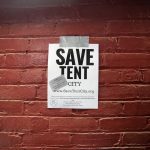
If the government is going to take away life, liberty, or property, the due process of law requires it to follow fair procedures. But, according to the Supreme Court, that’s not all that due process requires. The government also must have a good reason to take life, liberty, or property. On this episode, we head to Akron, Ohio where city officials have shut down a privately run homeless community—without a good reason.
Guests
Sage Lewis, The Homeless Charity & Village
Randy Barnett, Georgetown Law
Victoria Nourse, Georgetown Law
Erwin Chemerinsky, Berkeley Law
Lino Graglia, Texas Law
Jeff Rowes, Institute for Justice
Resources
More information on The Homeless Charity v. Akron
No Arbitrary Law: An Originalist Theory of the Due Process of Law, by Randy E. Barnett and Evan D. Bernick
Substantive Due Process, by Erwin Chemerinsky
A Tale of Two Lochners: The Untold History of Substantive Due Process and the Idea of Fundamental Rights, by Victoria F. Nourse
Scrutiny Land, by Randy E. Barnett
Washington v. Glucksberg Was Tragically Wrong, by Erwin Chemerinsky
An Introduction to Constitutional Law: 100 Supreme Court Cases Everyone Should Know, by Randy E. Barnett and Josh Blackman
Procedural Due Process | Episode 6
Before the government can take away your life, liberty, or property, it must first give you due process: fair and meaningful procedure. On this episode, we trace the history of due process from 1215 to today. And we head to Harris County, Texas, which operates the the third-largest jail in the country, to see why federal courts say its system of money bail violated that ancient guarantee.
Guests
Anthony Sanders, Institute for Justice
Dana Berliner, Institute for Justice
Diana Simpson, Institute for Justice
Alec Karakatsanis, Civil Rights Corps
Megan Stevenson, Antonin Scalia Law School – George Mason University
Resources
Procedural Due Process: The Original Understanding, by Edward J. Eberle
Due Process as Separation of Powers, by Nathan S. Chapman & Michael W. McConnell
Civil Due Process, Criminal Due Process, by Niki Kuckes
Only 2% of federal criminal defendants go to trial, and most who do are found guilty, by John Gramlich
The Downstream Consequences of Misdemeanor Pretrial Detention, by Paul Heaton, Sandra Mayson & Megan Stevenson
Distortion of Justice: How the Inability to Pay Bail Affects Case Outcomes, by Megan Stevenson
Harris County bail case page, Civil Rights Corps
The Navigable Waters | Episode 4
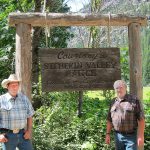
In 1873, the Supreme Court said that the Privileges or Immunities Clause protects a right to “use the navigable waters of the United States”—and not much else. But in the nearly 150 years since, the Court has never examined what the right to use the navigable waters means in practice. On this episode: a pair of brothers from Stehekin, Washington, try to change that.
Resources
More information on Courtney v. Danner
The Waterman’s Song, David S. Cecelski
Black Jacks: African American Seamen in the Age of Sail, W. Jeffrey Bolster

All But Redacted: The Privileges or Immunities Clause | Episode 3
[Click here for Episode 1. And click here for Episode 2.]
Guests
Chris Green, University of Mississippi School of Law
Randy Barnett, Georgetown Law
With appearances by:
Kurt Lash, University of Richmond School of Law
Aderson Francois, Georgetown Law
Martha Jones, Johns Hopkins University
Josh Blackman, South Texas College of Law Houston
Sheldon Gilbert, National Constitution Center
Resources
C-SPAN Coverage of Professor Barnett’s talk on Slaughterhouse at the U.S. Supreme Court Historical Society.
C-SPAN Coverage of Justice Ruth Bader Ginsburg at Georgetown Law Center’s mock retrial of Bradwell v. Illinois.
Bench Memo for the Re-argument of The Slaughter-House Cases, by Nicholas Mosvick
The Slaughterhouse Cases: Regulation, Reconstruction, and the Fourteenth Amendment, by Ronald M. Labbé and Jonathan Lurie
Equal Citizenship, Civil Rights, and the Constitution: The Original Sense of the Privileges or Immunities Clause, by Chris Green
Interracial Marriage and the Original Understanding of the Privileges or Immunities Clause, by David Upham
From Antislavery Lawyer to Chief Justice: The Remarkable but Forgotten Career of Salmon P. Chase, by Randy Barnett